
Berlin-Cube — Climate-adapted modular urban infrastructure with DEKRA-tested vehicle access protection for safe public spaces.
Protecting Cities. Enriching Life.
Urban infrastructure for safe and liveable public spaces. Urban greenery. Climate adaptation. Amenity. Smart City. Tested vehicle access protection.
Berlin-Cube exists to help cities become safer, greener and more livable.
Berlin-Cube is a modular urban infrastructure system from Berlin that combines planted street furniture with DEKRA-tested vehicle access protection to IWA 14-1:2013 — for city centres, squares, pedestrian zones and events.
Spaces built for security become spaces built for life.
In the Kantstraße since June 2026
Between the Waldorf Astoria and Upper West, the first complete Berlin-Cube installation stands in public street space. Planted, lit, walkable — and a crash-tested vehicle security barrier. Not a rendering: photographs taken on site.
The installation remains in place until the end of September 2026, when it will be dismantled as planned — set up without foundations, removed without trace.
Kantstraße, July 2026 — the complete installation in evening light.

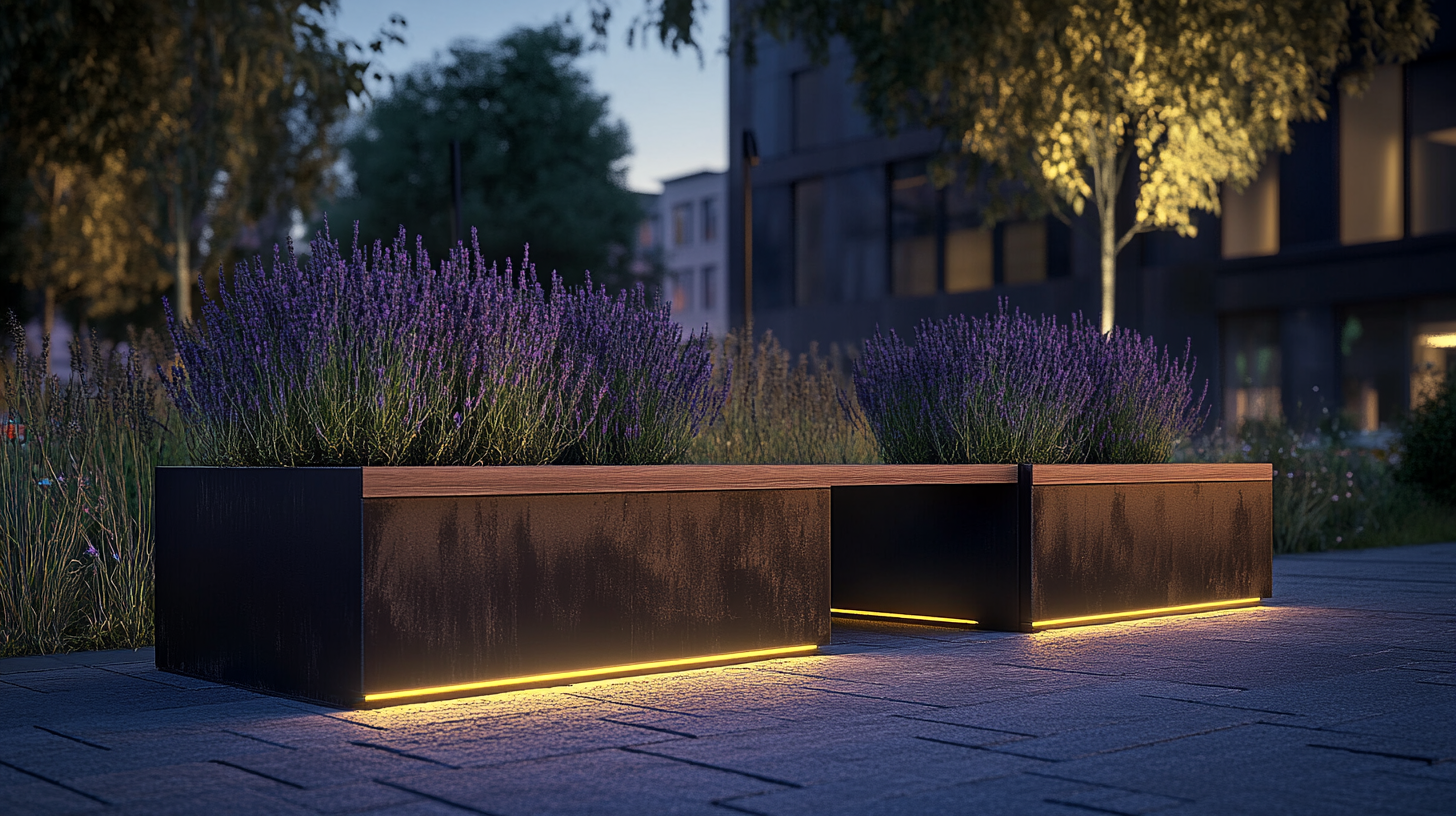
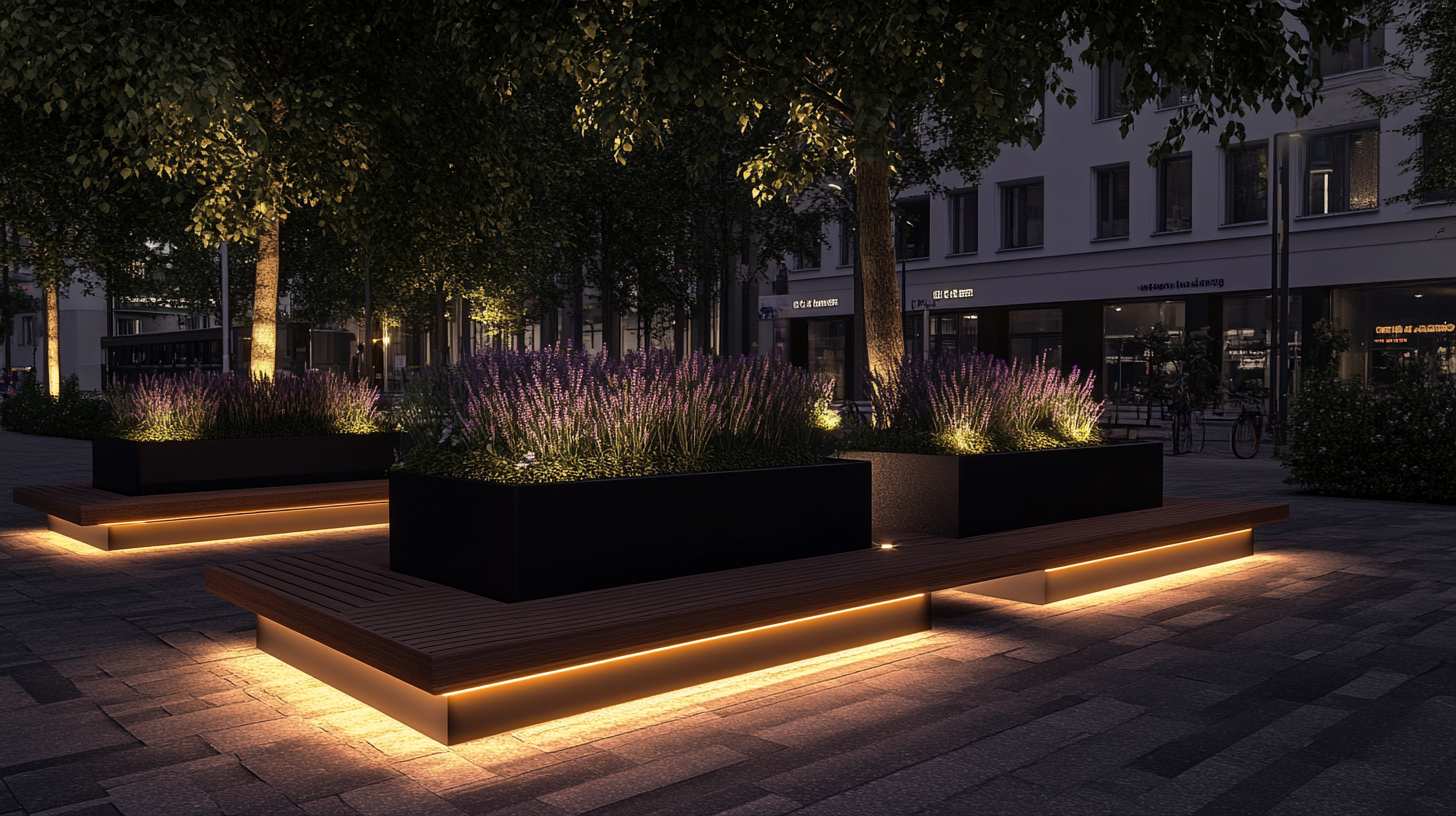
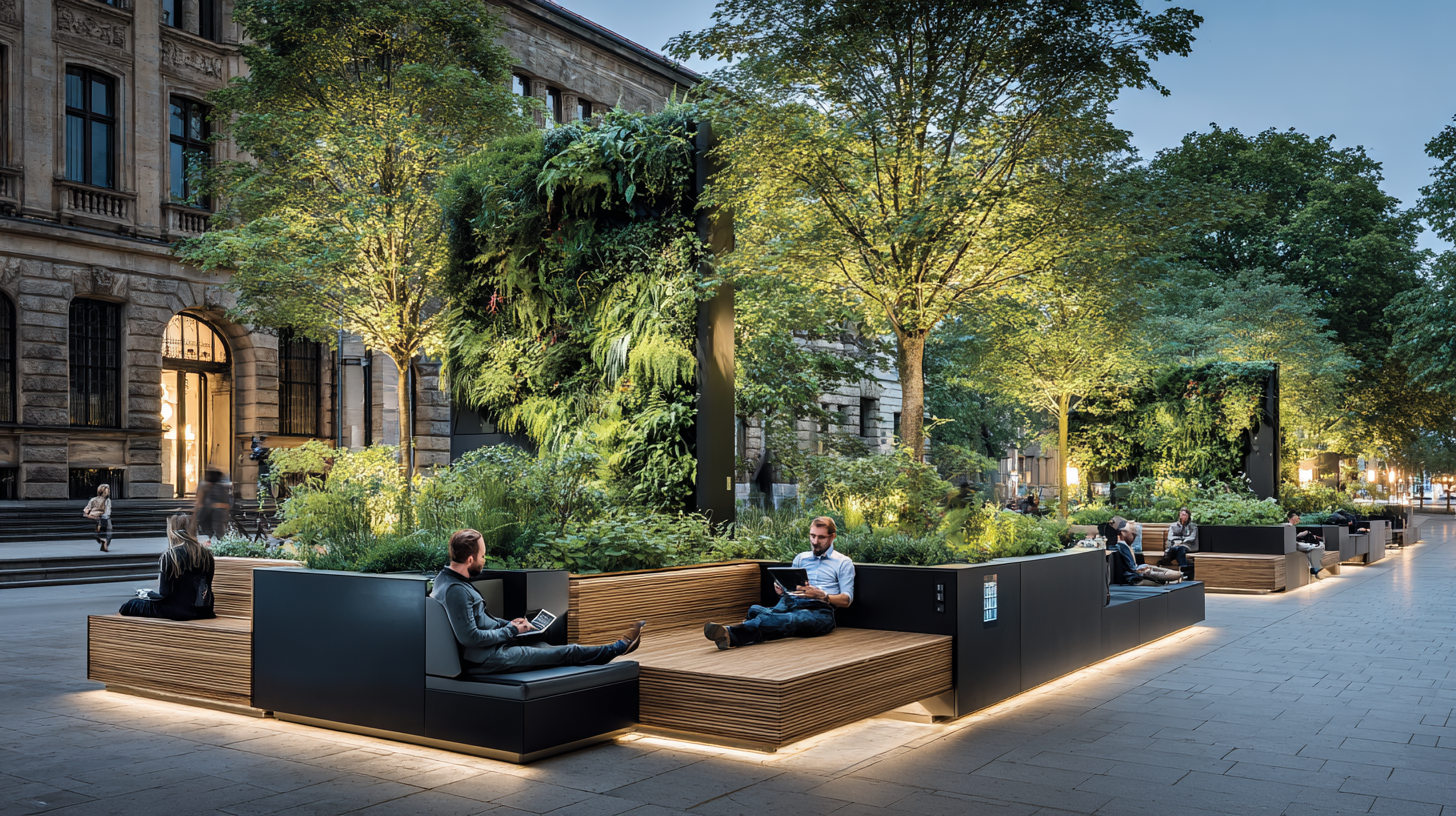
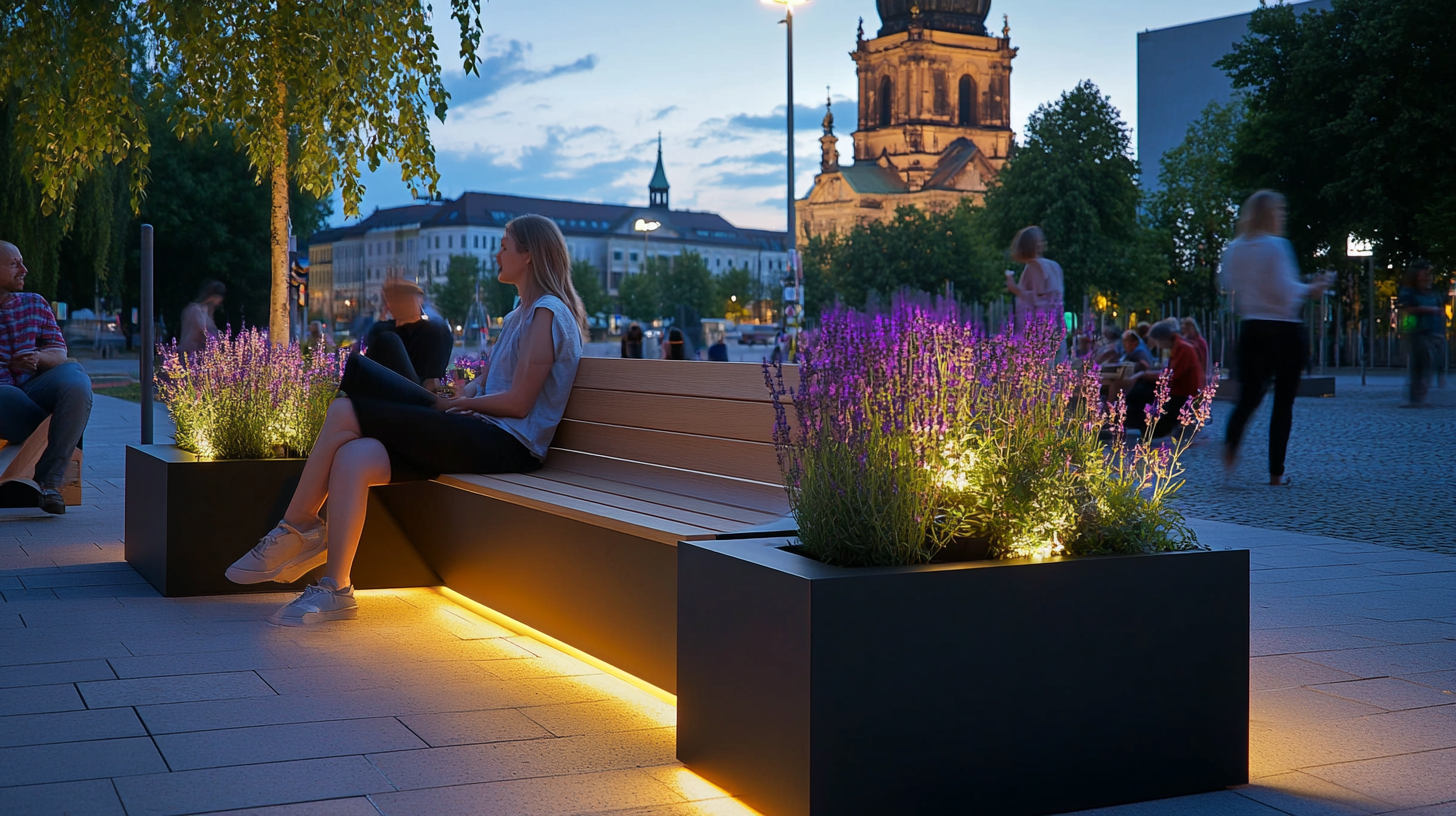
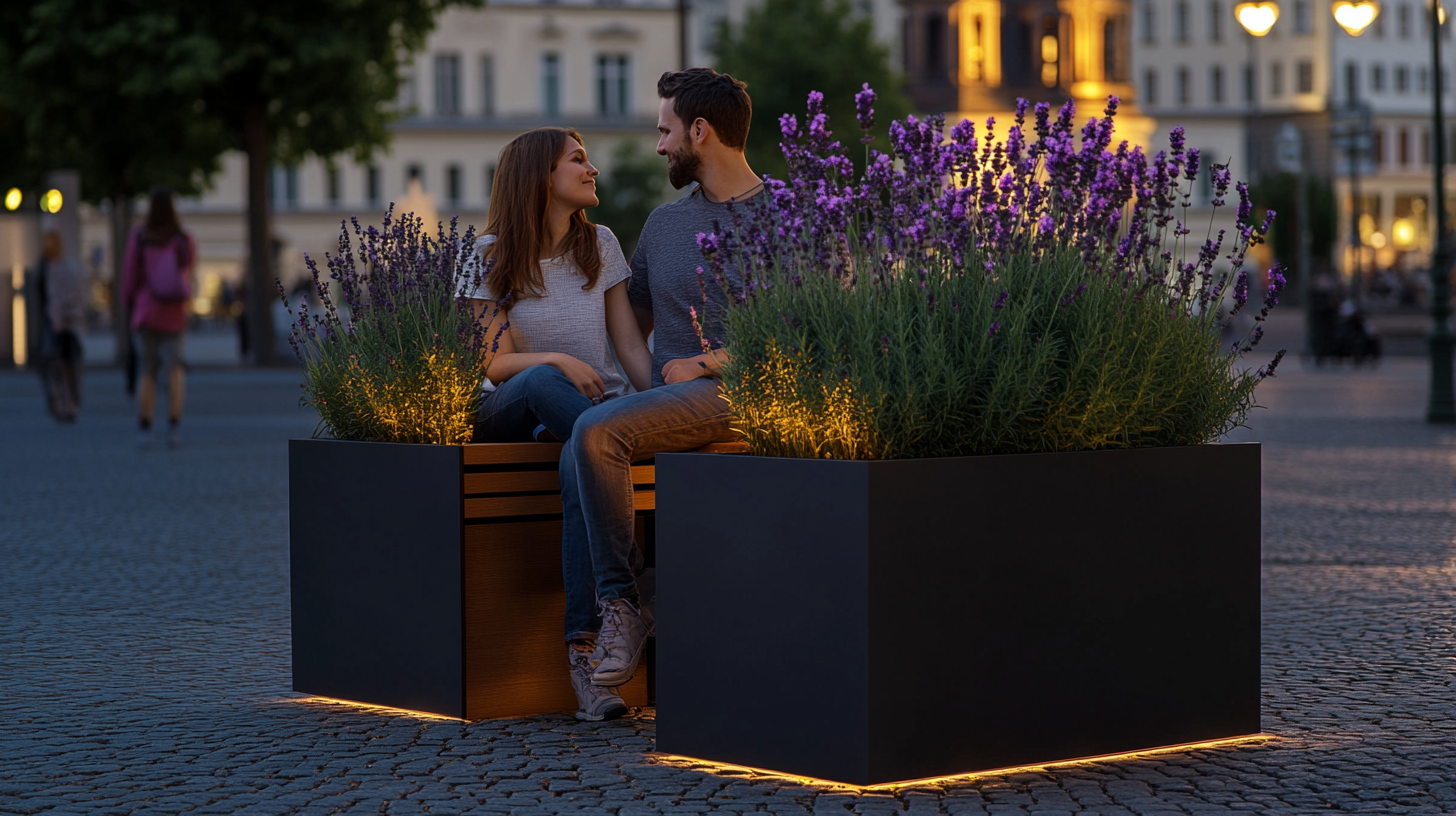
Sit down, breathe, enjoy. Under trees, in the scent of lavender. And the best part: people actually use it — everyone does.

Looking towards the Kaiser Wilhelm Memorial Church. Trees, lavender and perennials grow inside the modules, not beside them.

Linked into a continuous line. Every second module carries a bench, with access to the carriageway in between.

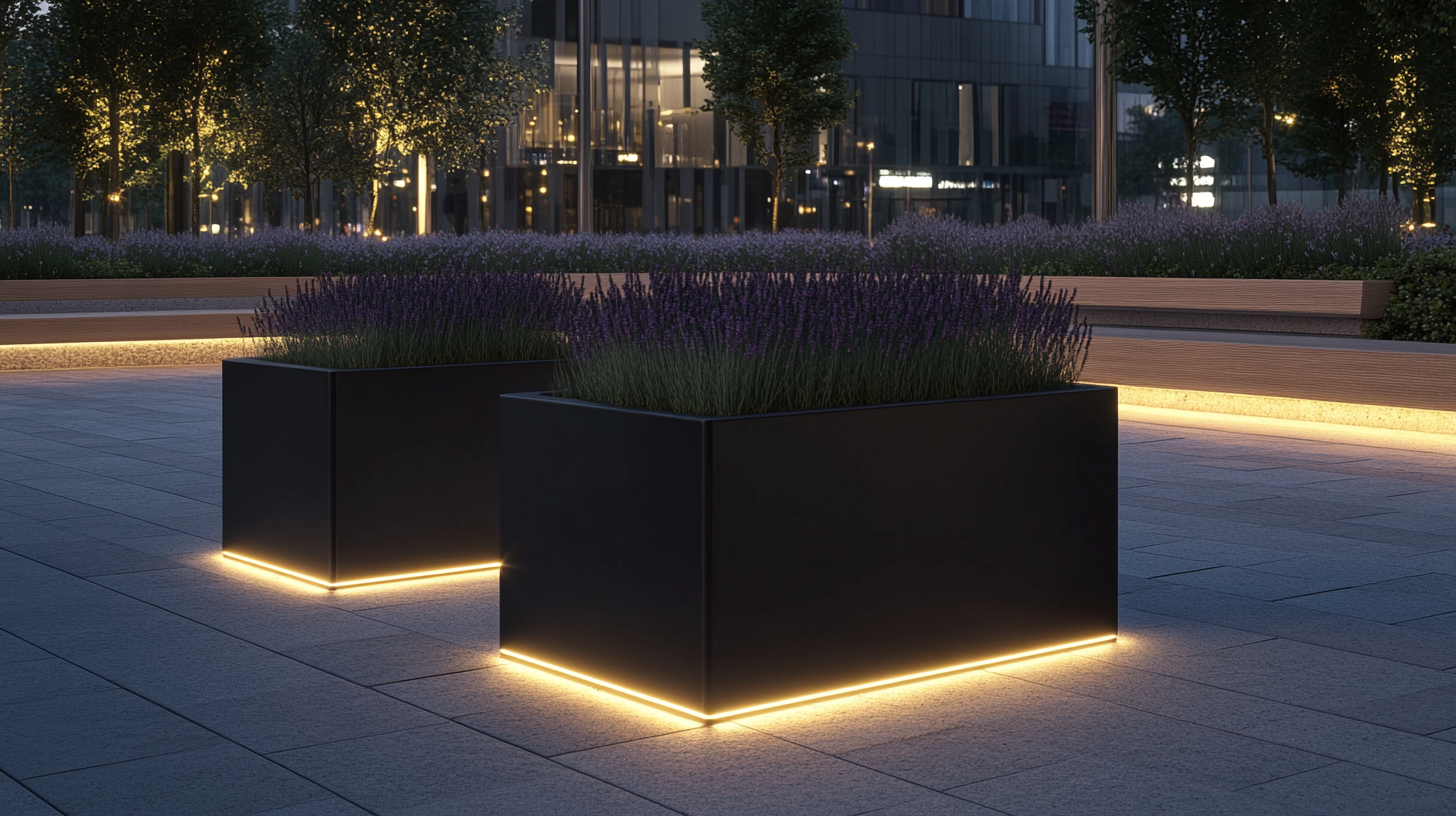
The recessed light strip runs right around each module. At night it marks the installation without floodlighting the street.

Substrate deep enough for woody plants, not seasonal bedding. The planting is designed to stay.

Seat height and timber top are part of the module itself, not an add-on.
Drivable ramps sit between the modules. The bike lane runs through, the pavement stays accessible. And where emergency routes must remain clear, the modules are placed in a staggered layout — protected and still passable. Access protection does not mean barricading.

District Mayor Kirstin Bauch, AG City Berlin board member Patrick Wittke and Martin Fichtelmann at the installation, June 2026.
Pilot installation in cooperation with AG City Berlin and the Charlottenburg-Wilmersdorf District Office. Installation time for the complete run: around ten hours.
The module is a platform.
Set up as a demonstration for decision-makers from politics and public administration, at an outlet centre in Wustermark, Brandenburg.

Three modules in a continuous line. Drivable ramps and tactile paving in between — the route stays open for everyone.

One module carries an e-bike charging station with two charging points — and a tree on top. Technology and greenery in the same unit, not side by side.

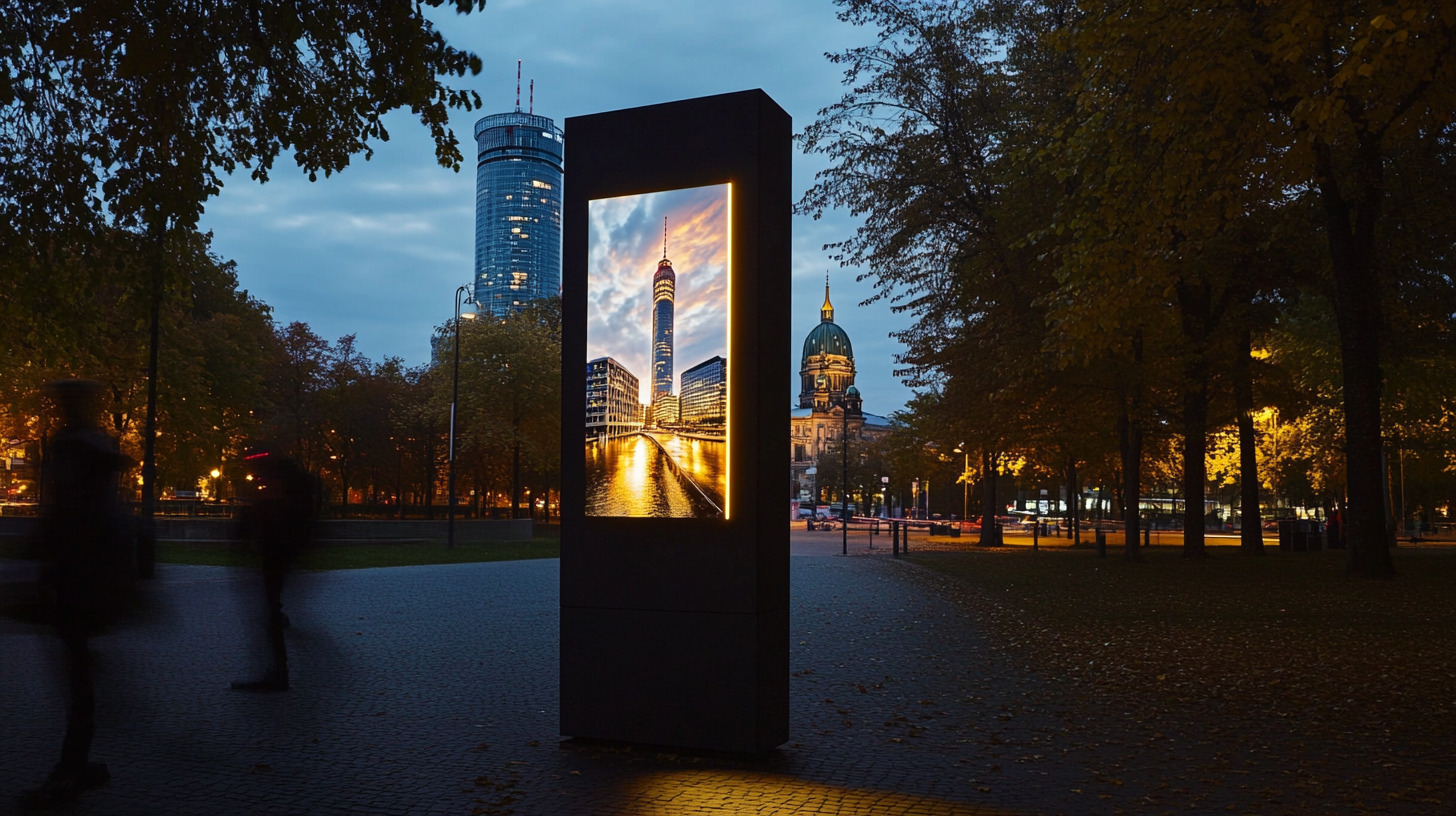
One module face as an advertising surface. What greens and protects a city can help pay for itself.
Berlin-Cube does not build bollards.
Berlin-Cube builds the infrastructure
of the next generation.
Products are not the point. Municipal challenges are.
Today.
This is how we protect our cities today.
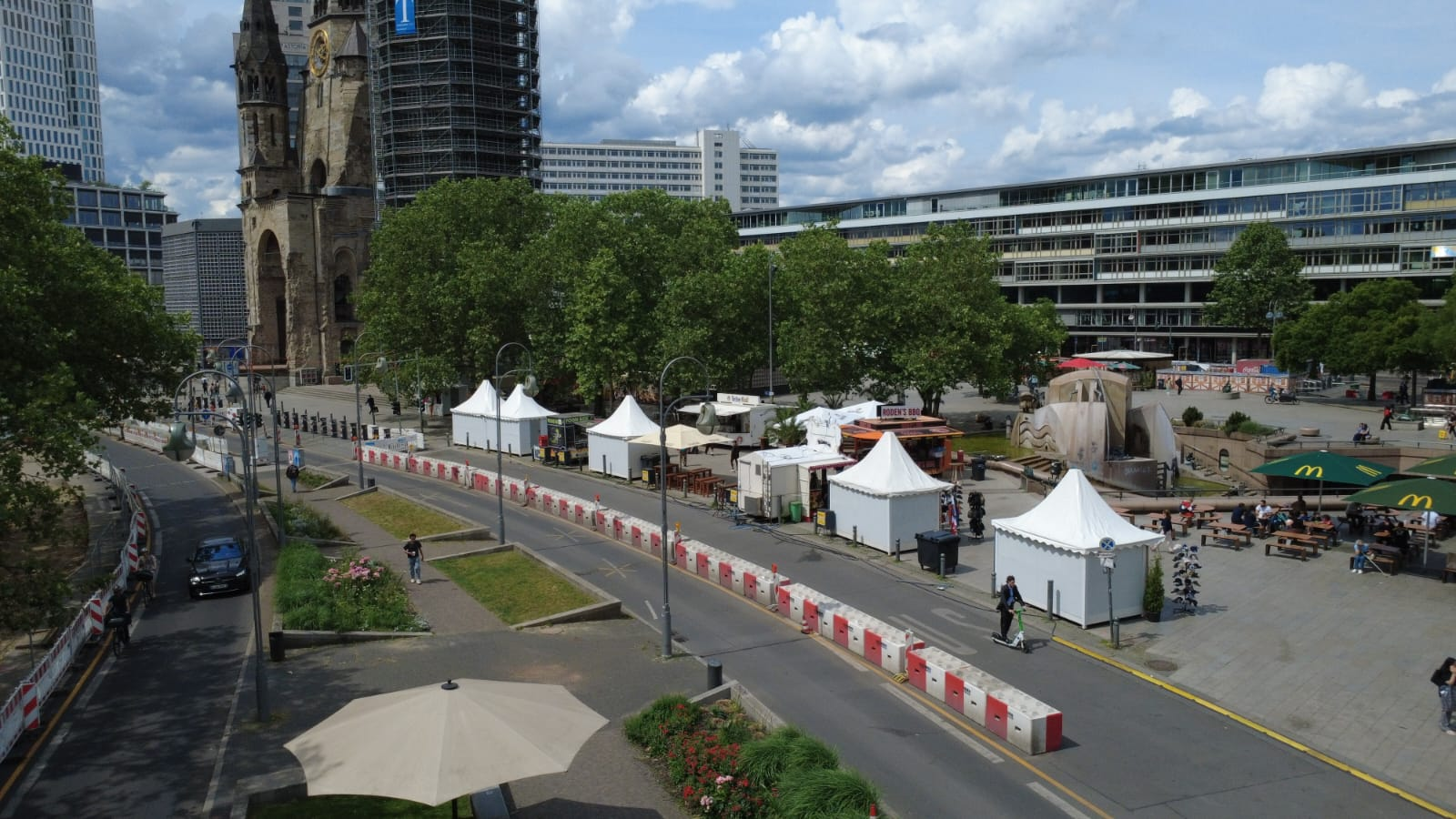
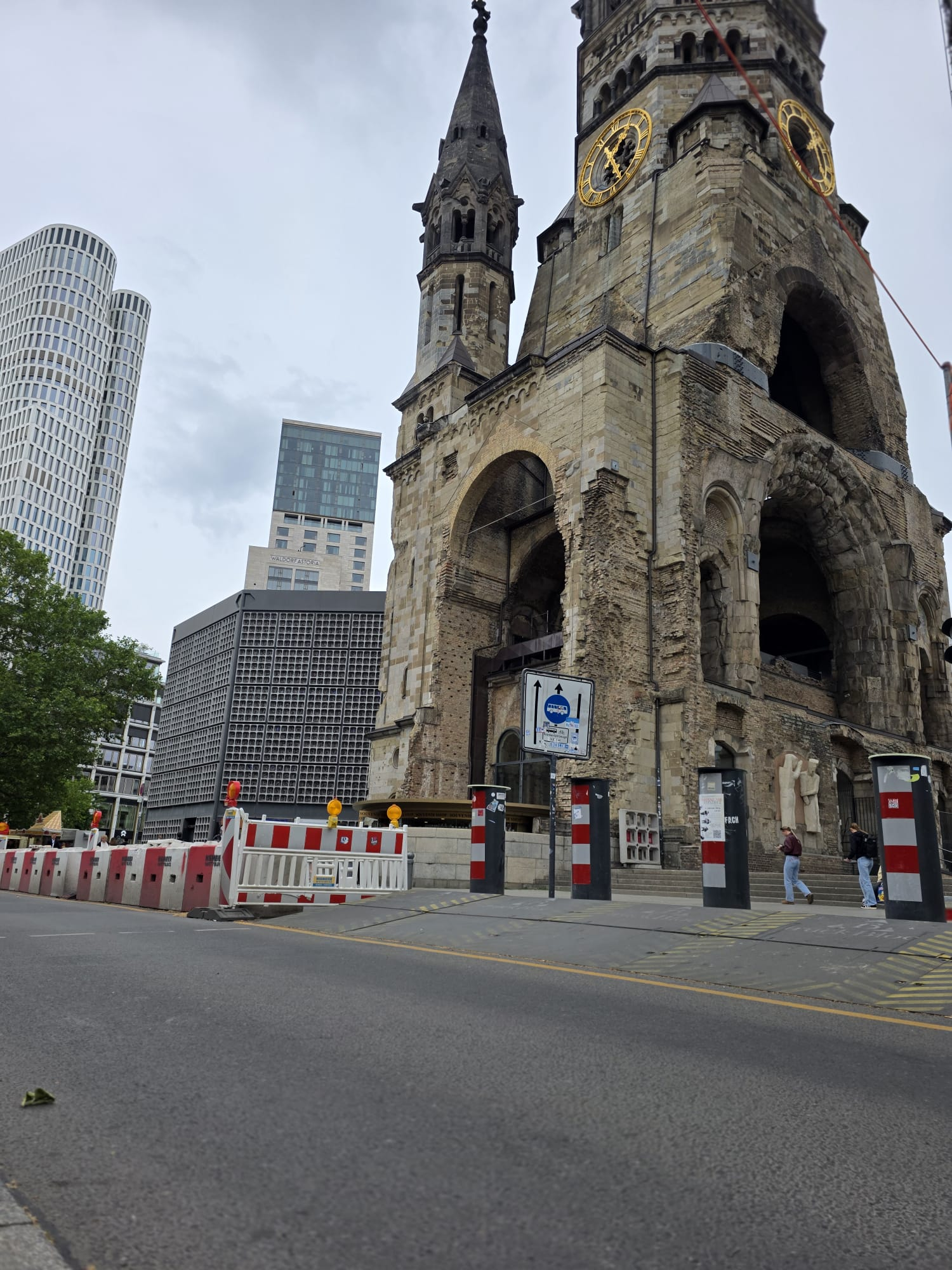
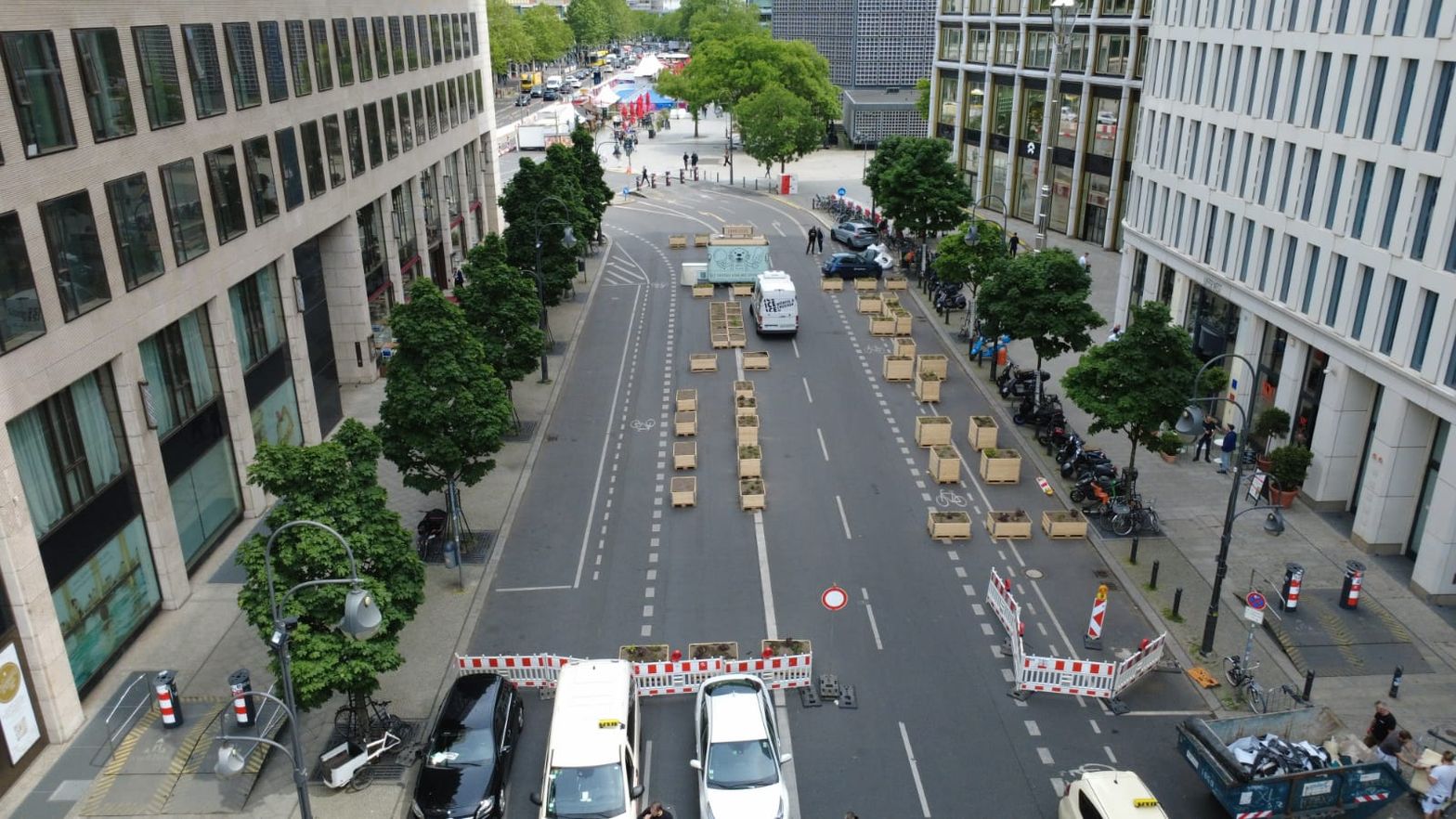
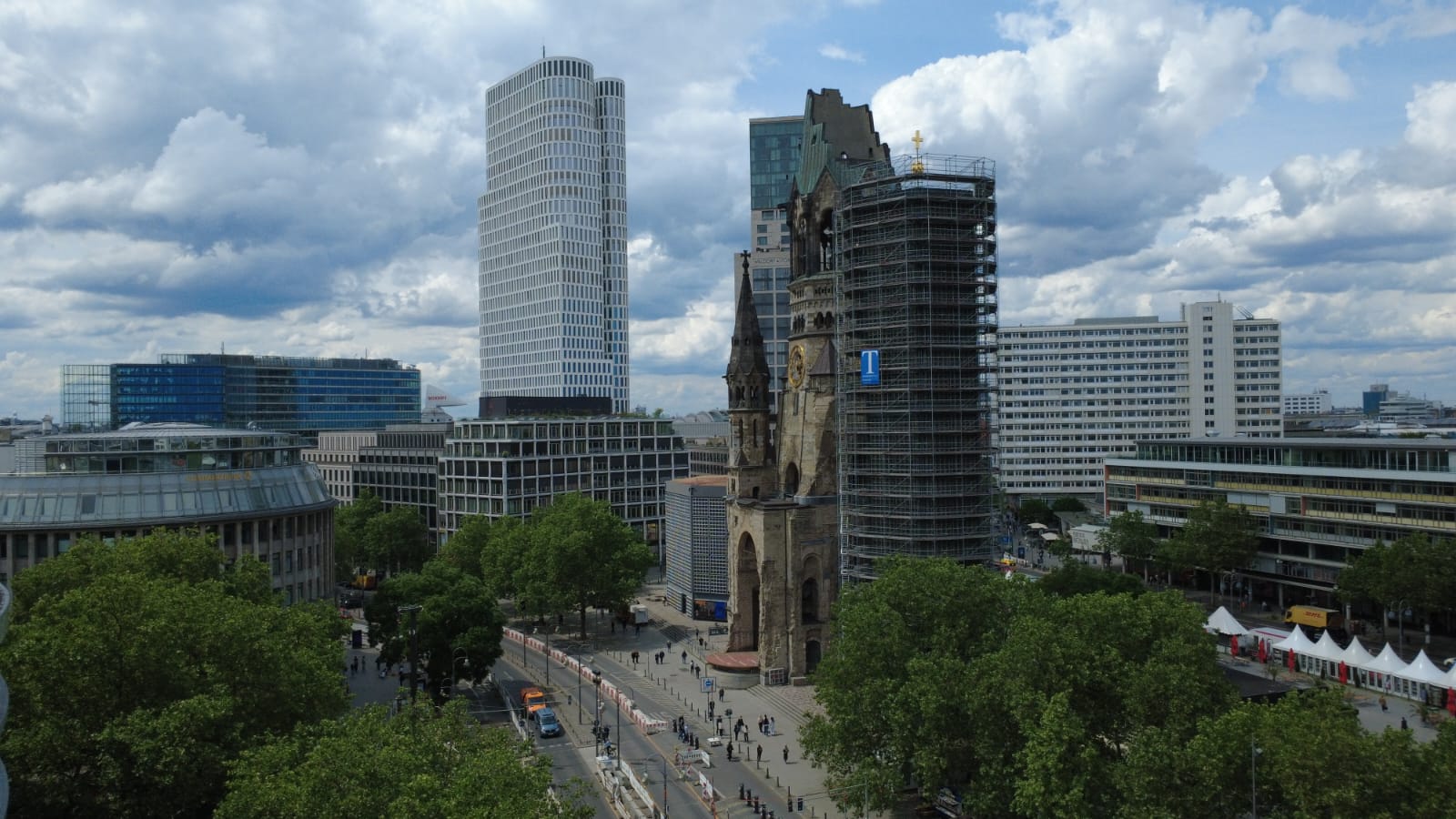
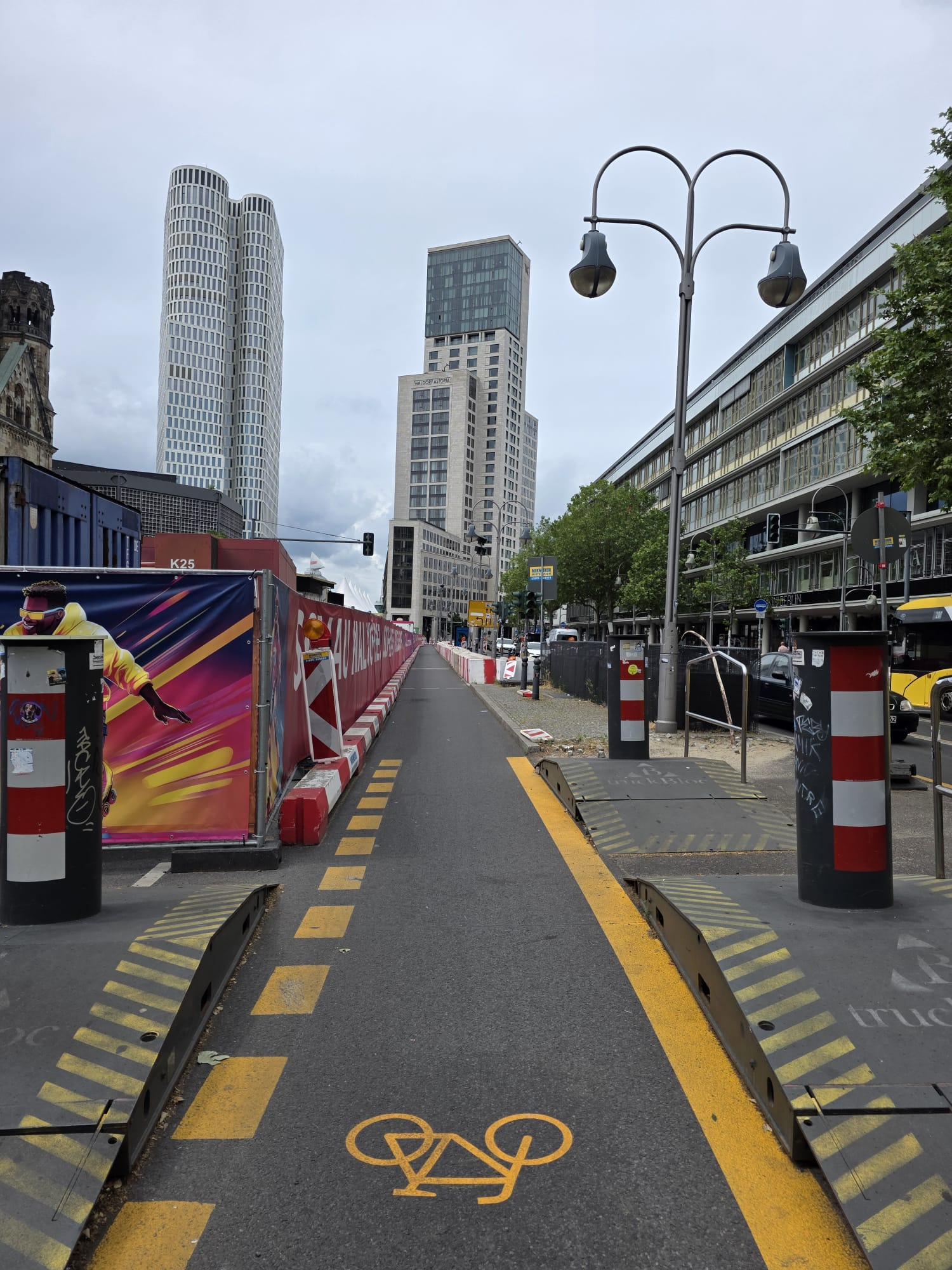
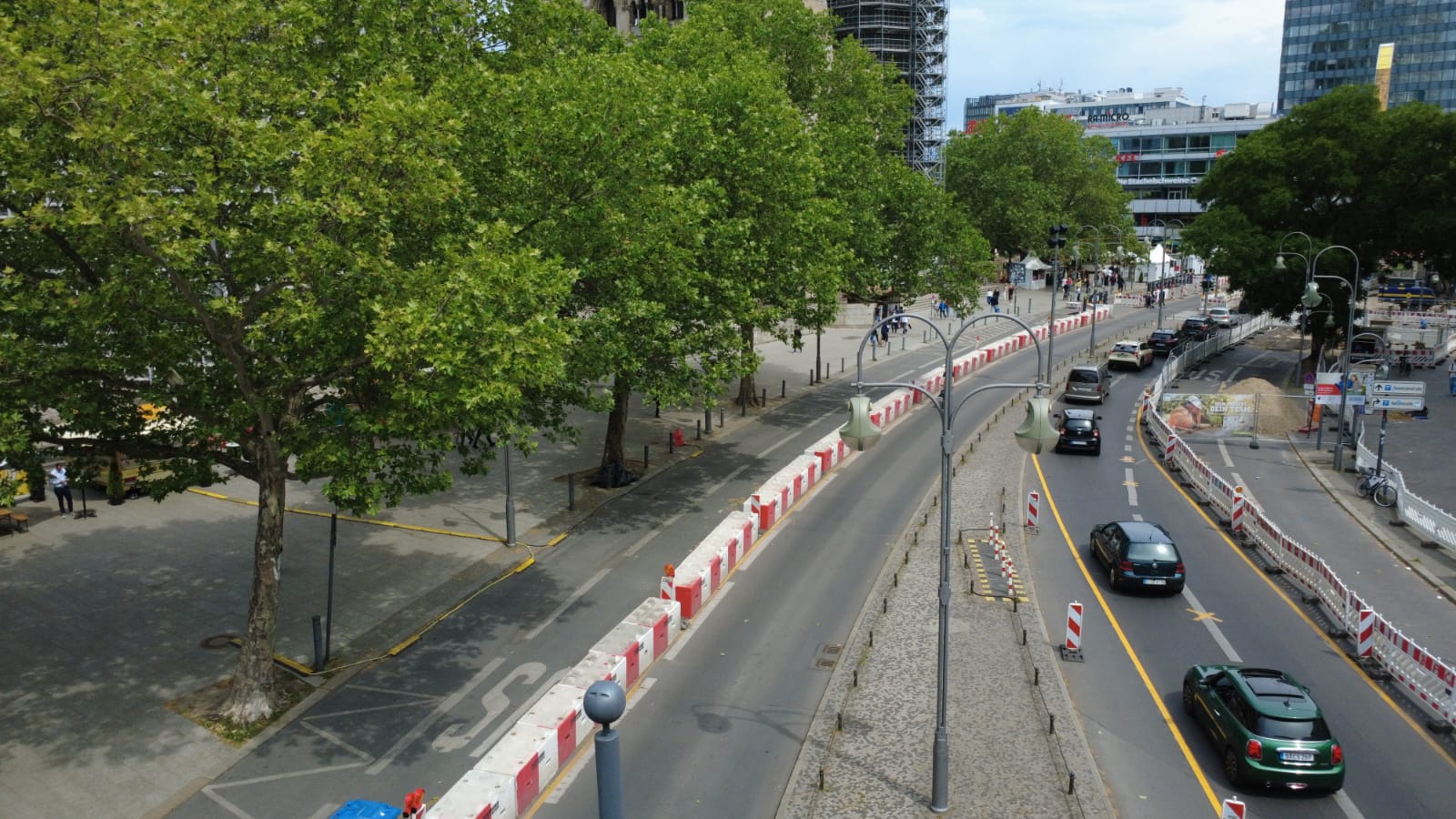
Original photographs · Breitscheidplatz & Kantstraße.
Before. After.
Same perspectives. Two realities.
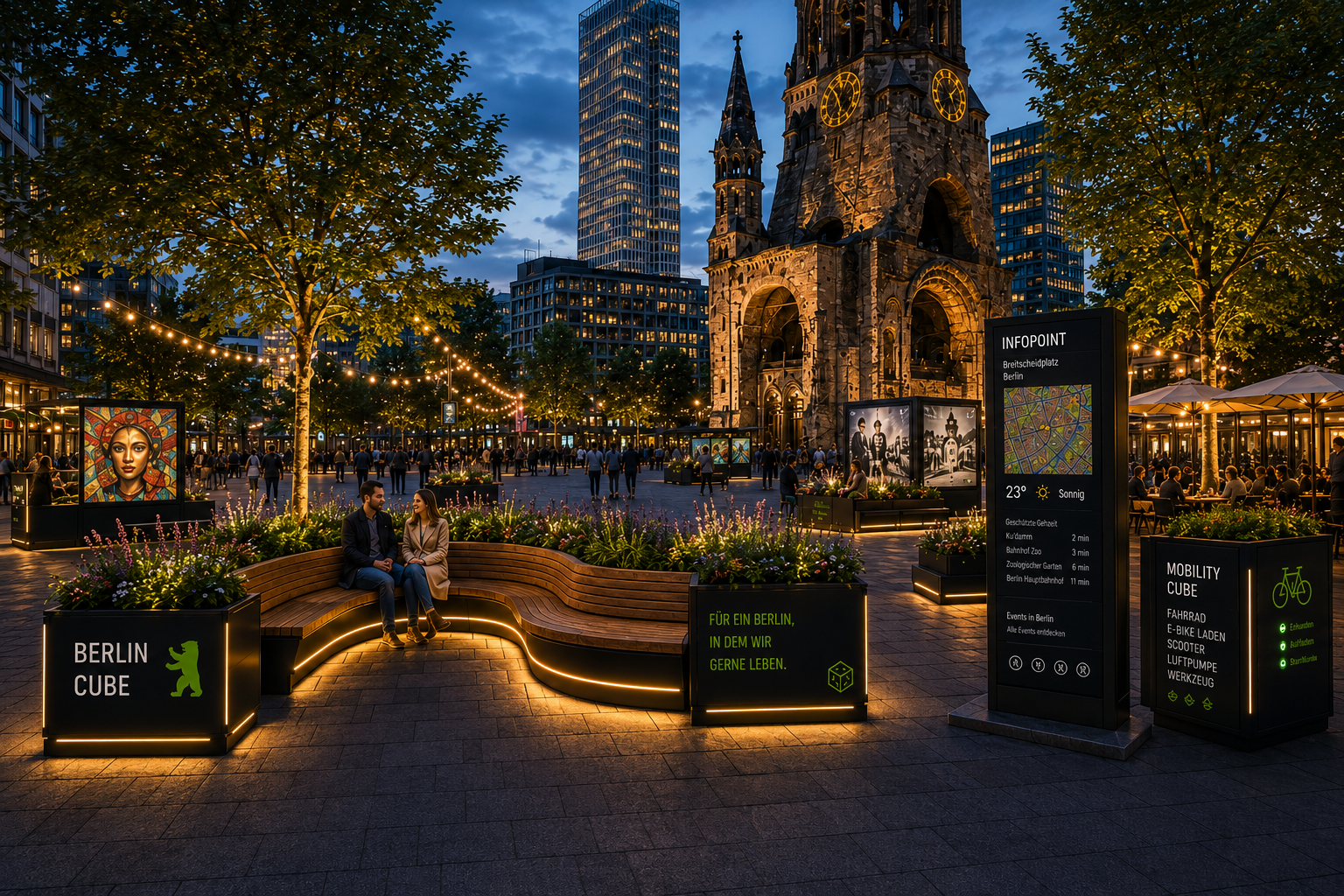
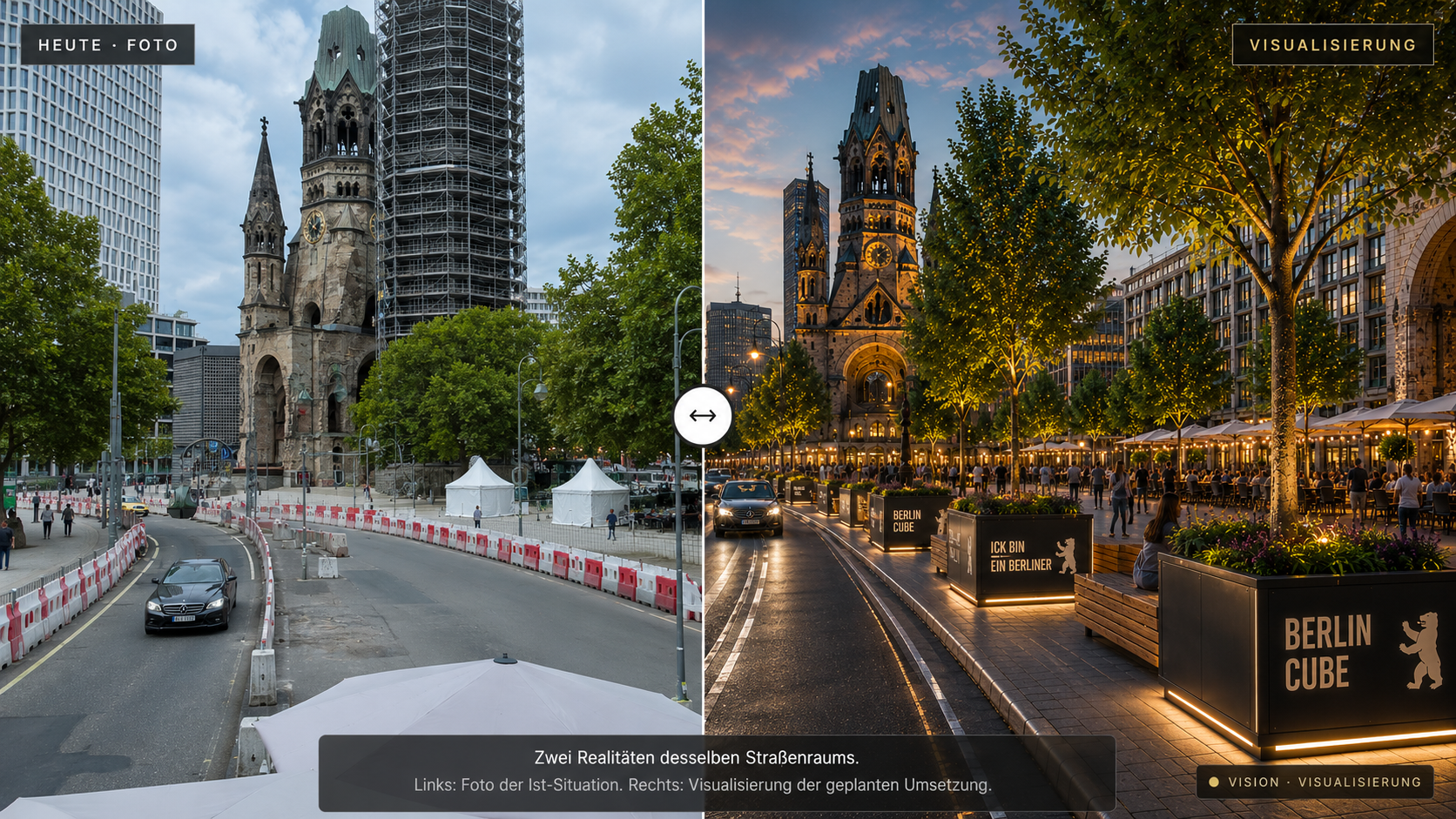
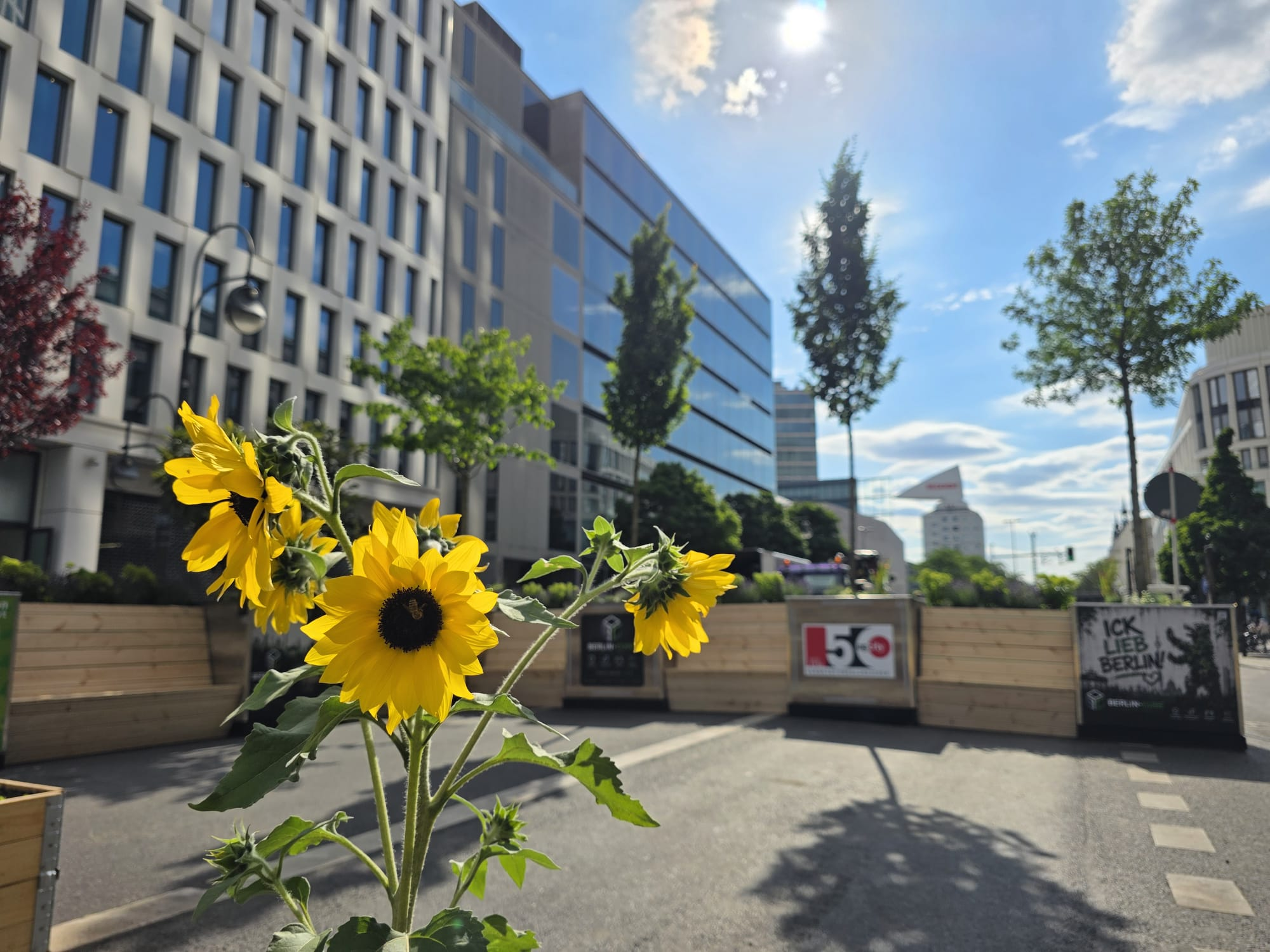
Left: before installation. Right: the realised project.
A vision for the Berlin of tomorrow.
Drag the slider left or right.
Idea
Development
Prototype
Pilot Berlin
European Cities
Idea
Development
Prototype
Pilot Berlin
European Cities
Cities are changing.Not tomorrow. Today.
Climate change, new mobility, rising safety demands and the desire for liveable public spaces are transforming the requirements for urban infrastructure.
The question is no longer whether infrastructure needs to change.
But how.
Which challenge would you like to solve?
Not products. The questions cities are facing today.
Climate adaptation
Prepare cities for a climate that is already changing.
Heat
Cool urban heat islands. Shade. Evaporation. Summer amenity.
Heavy rain
Absorb, retain and release water — where it falls.
Urban greenery
Planting, habitats, biodiversity. Green as infrastructure, not decoration.
Amenity
Places where people don't just pass through — they stay.
Mobility
Space for people, bikes, e-transport. Charging where it's needed.
Smart City
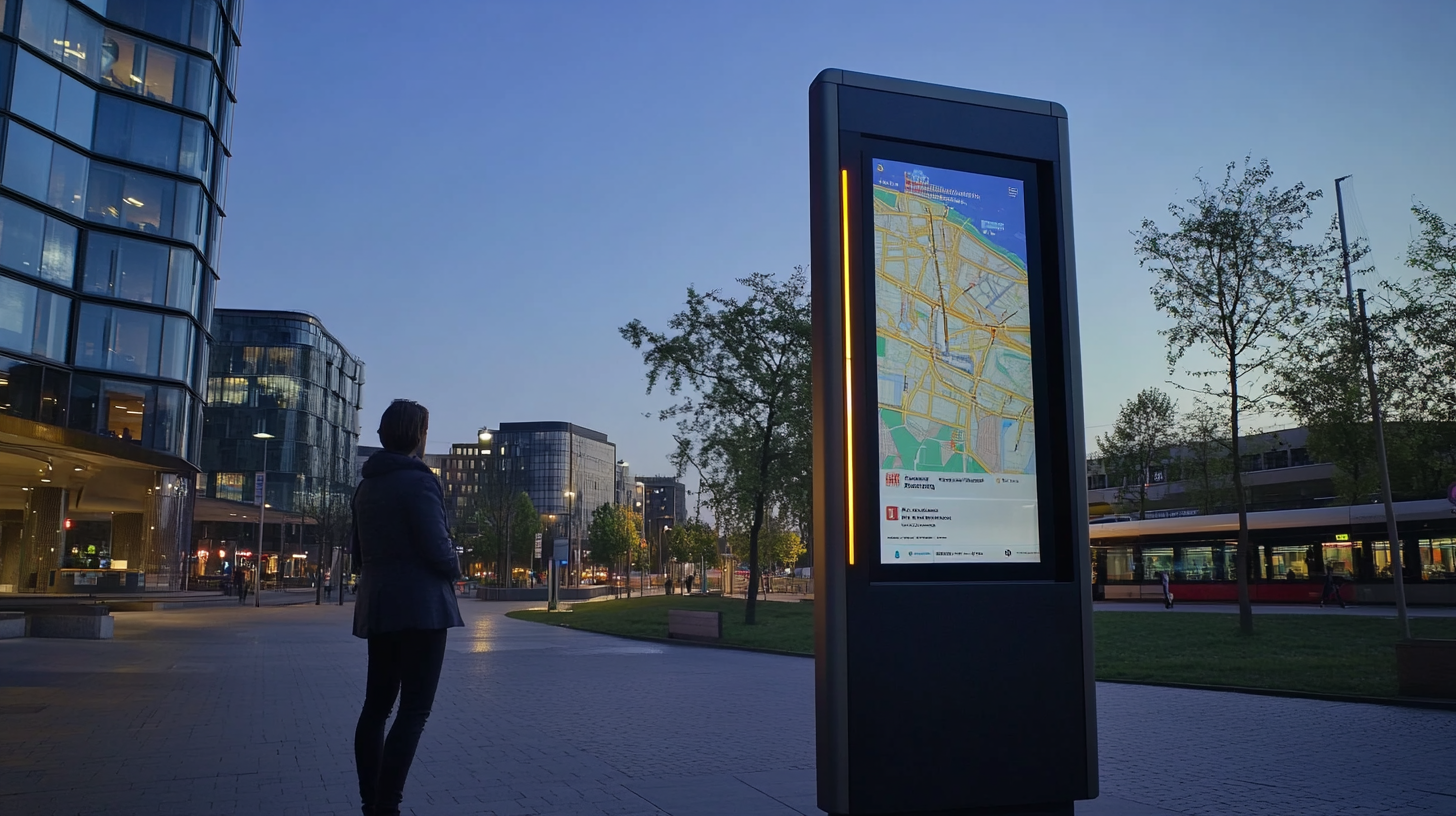
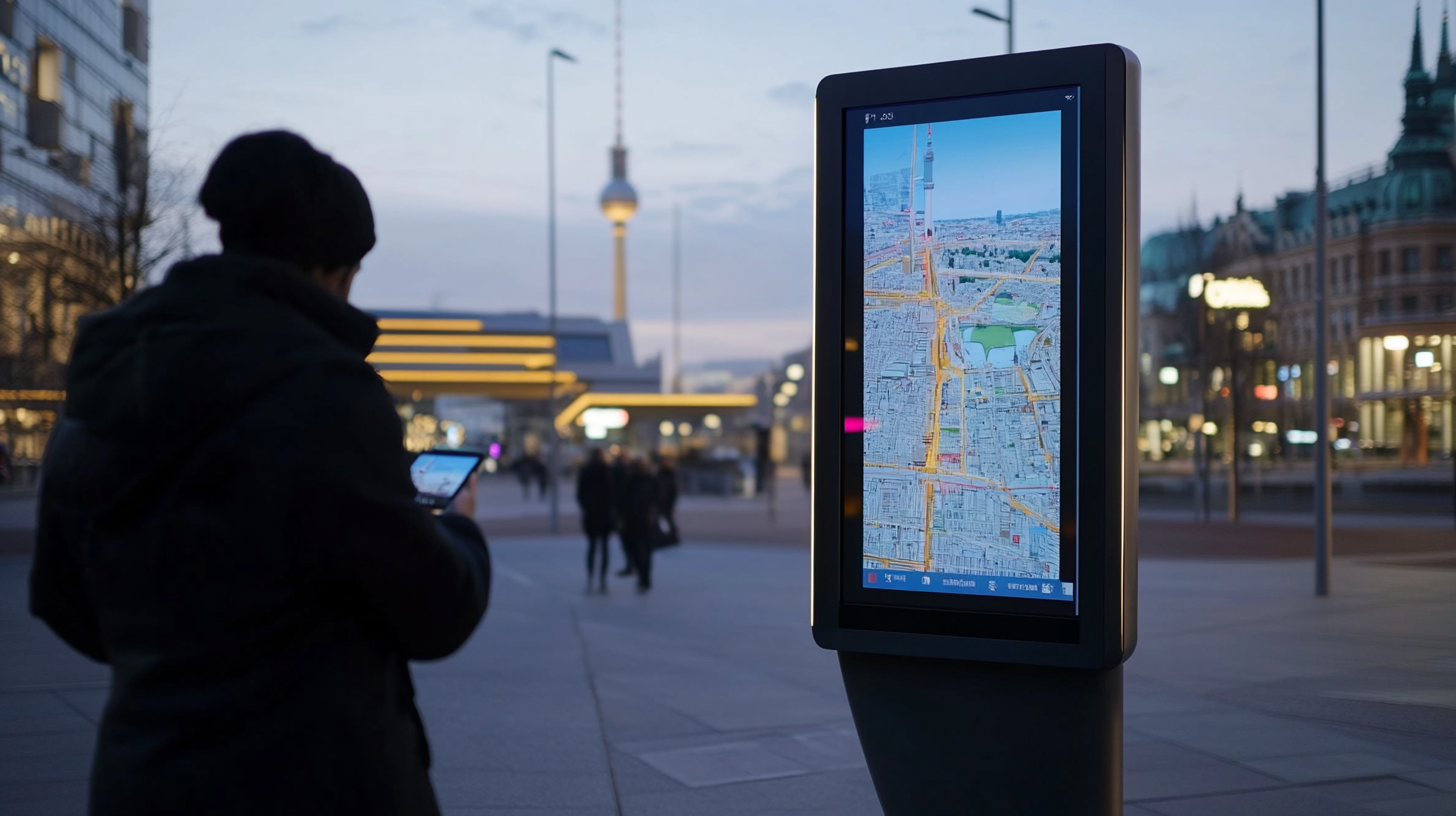
Sensors, connectivity, data nodes. Reliable. Secure. Sovereign.
Safety
Protect public spaces — without turning them into fortresses.
Financing
A system that combines municipal investment, subsidies and refinancing.
Which goals does Berlin-Cube support?
Ten political goals. One infrastructure contributing to all of them.
Climate adaptation
Resilience
Biodiversity
Smart City
Mobility
Public safety
Digitalisation
Accessibility
Urban development
Amenity
Impact matrix · political target picture, not a funding-programme mapping.
One base system. Different functions. Different places.
The Collection.
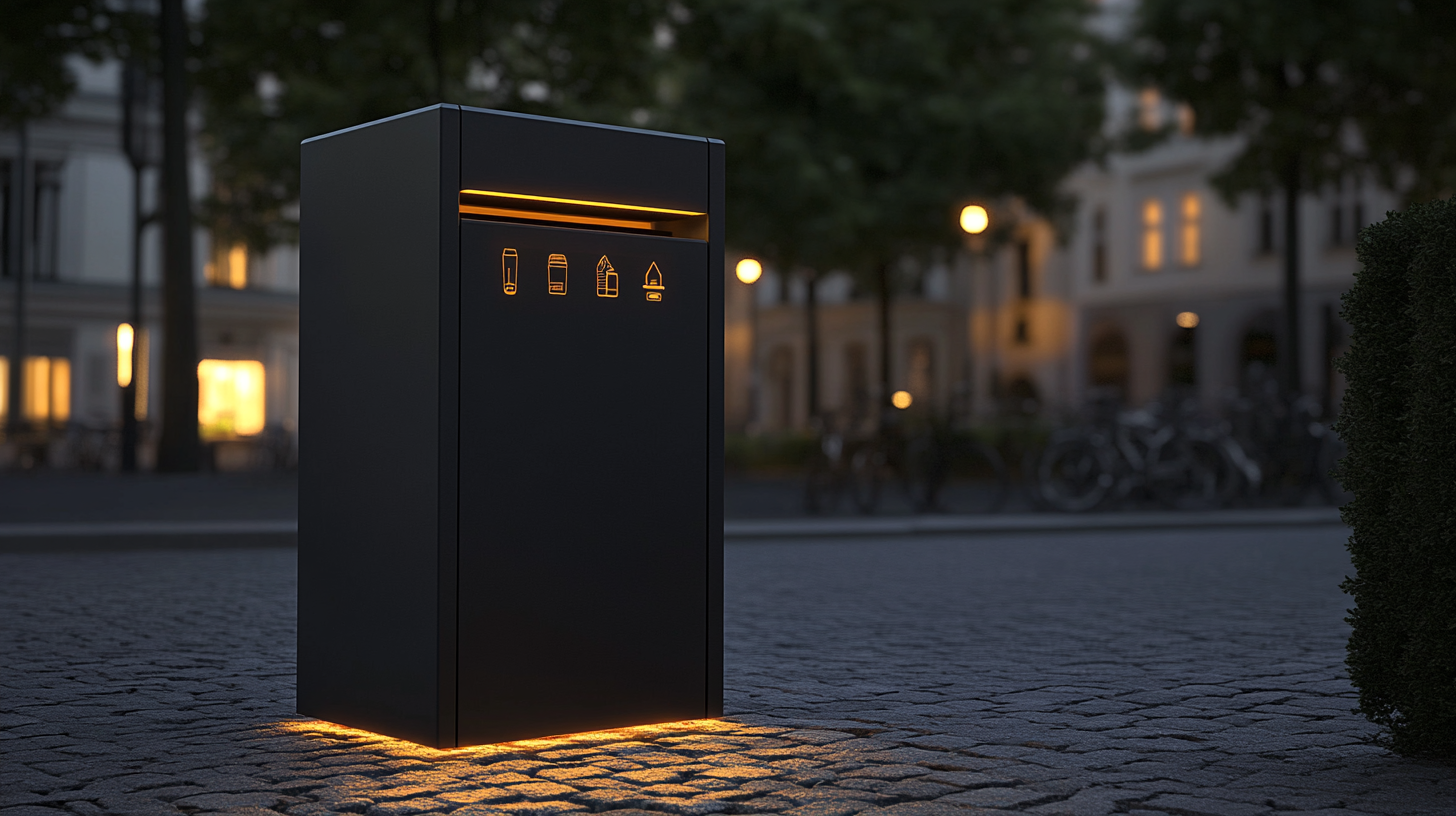
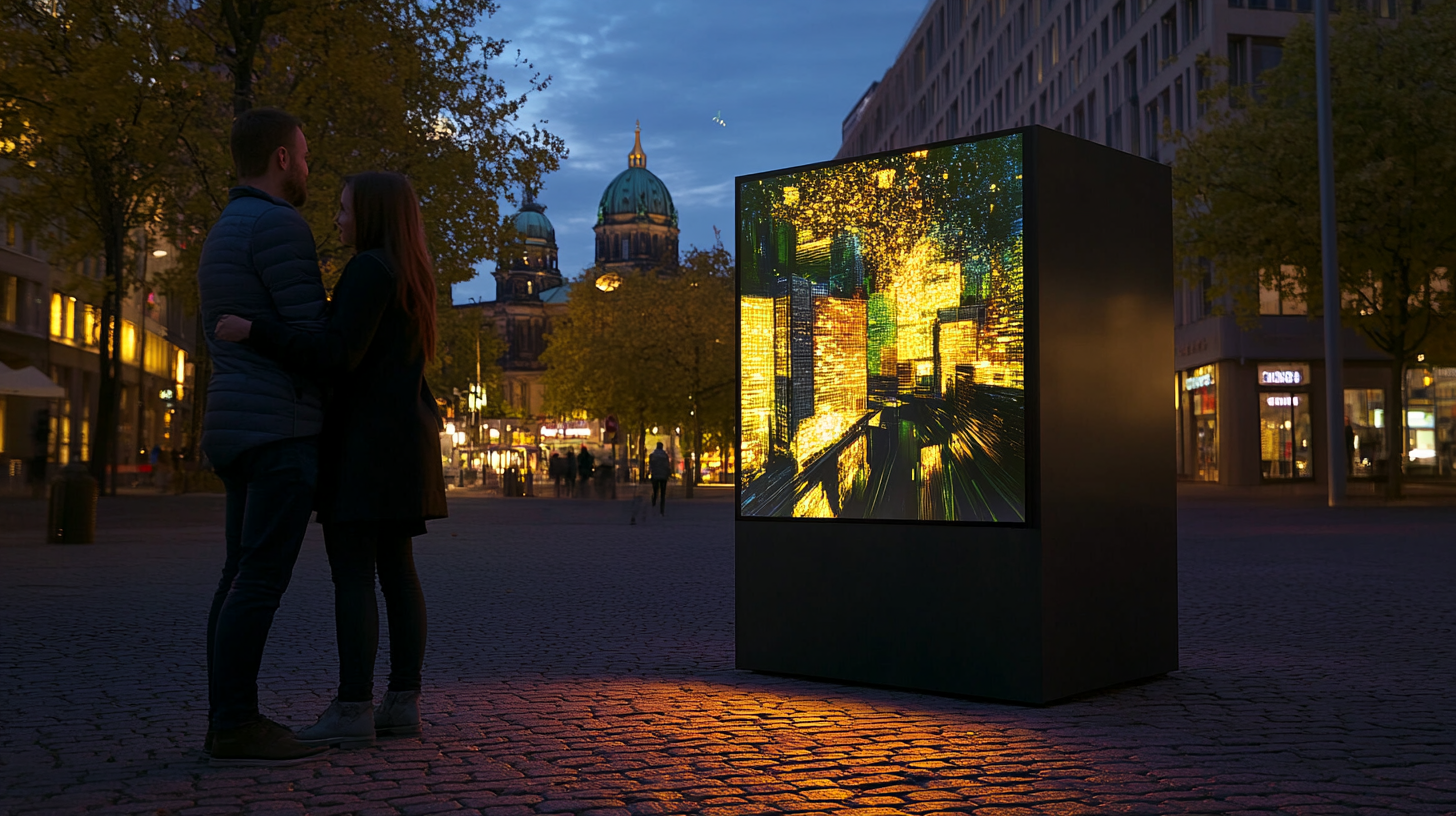
Nine modules. One system.
Berlin-Cube combines safety, climate adaptation, energy, digitalisation and amenity in one modular platform. Not a single module takes the spotlight — the interplay does.
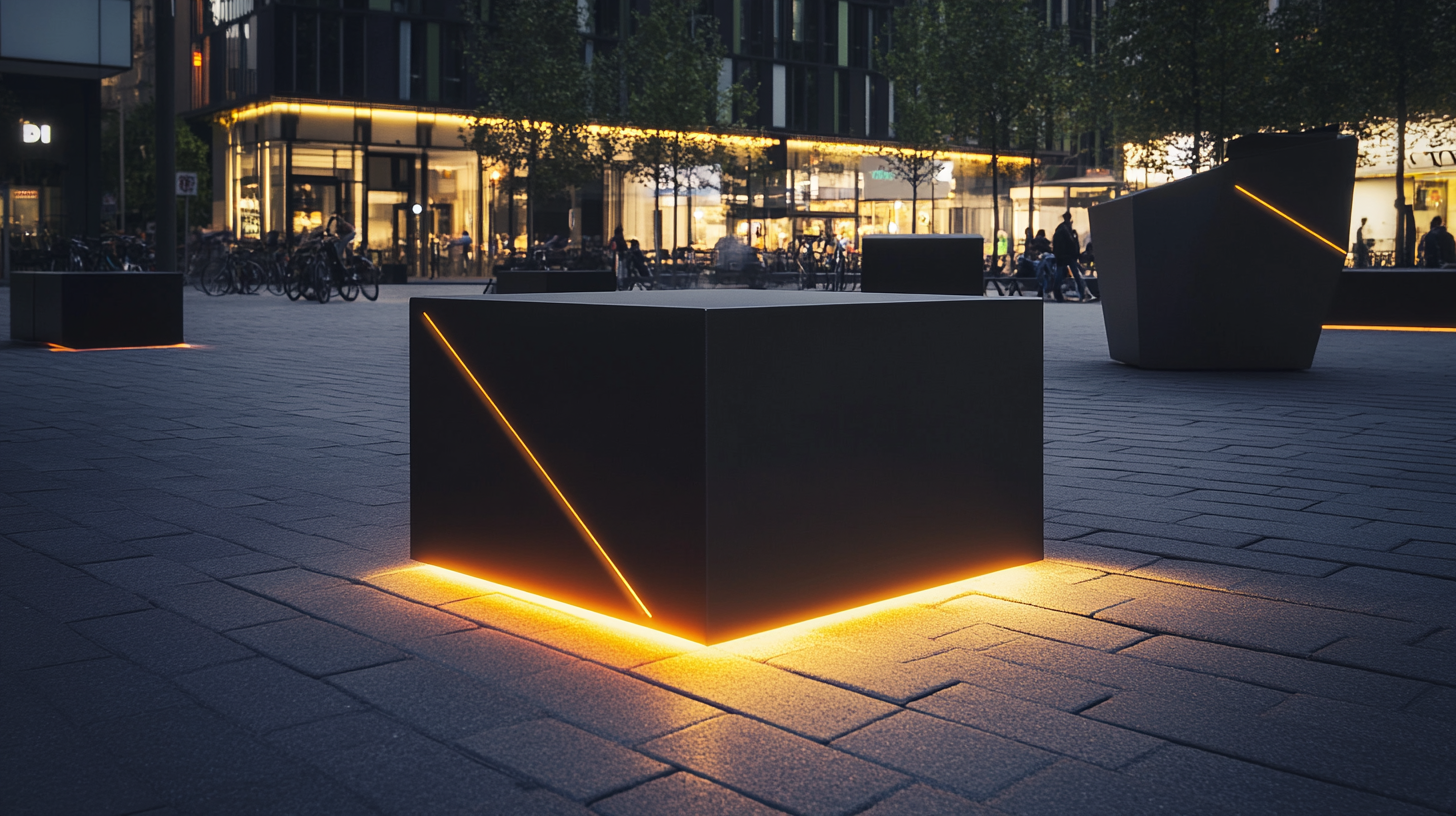
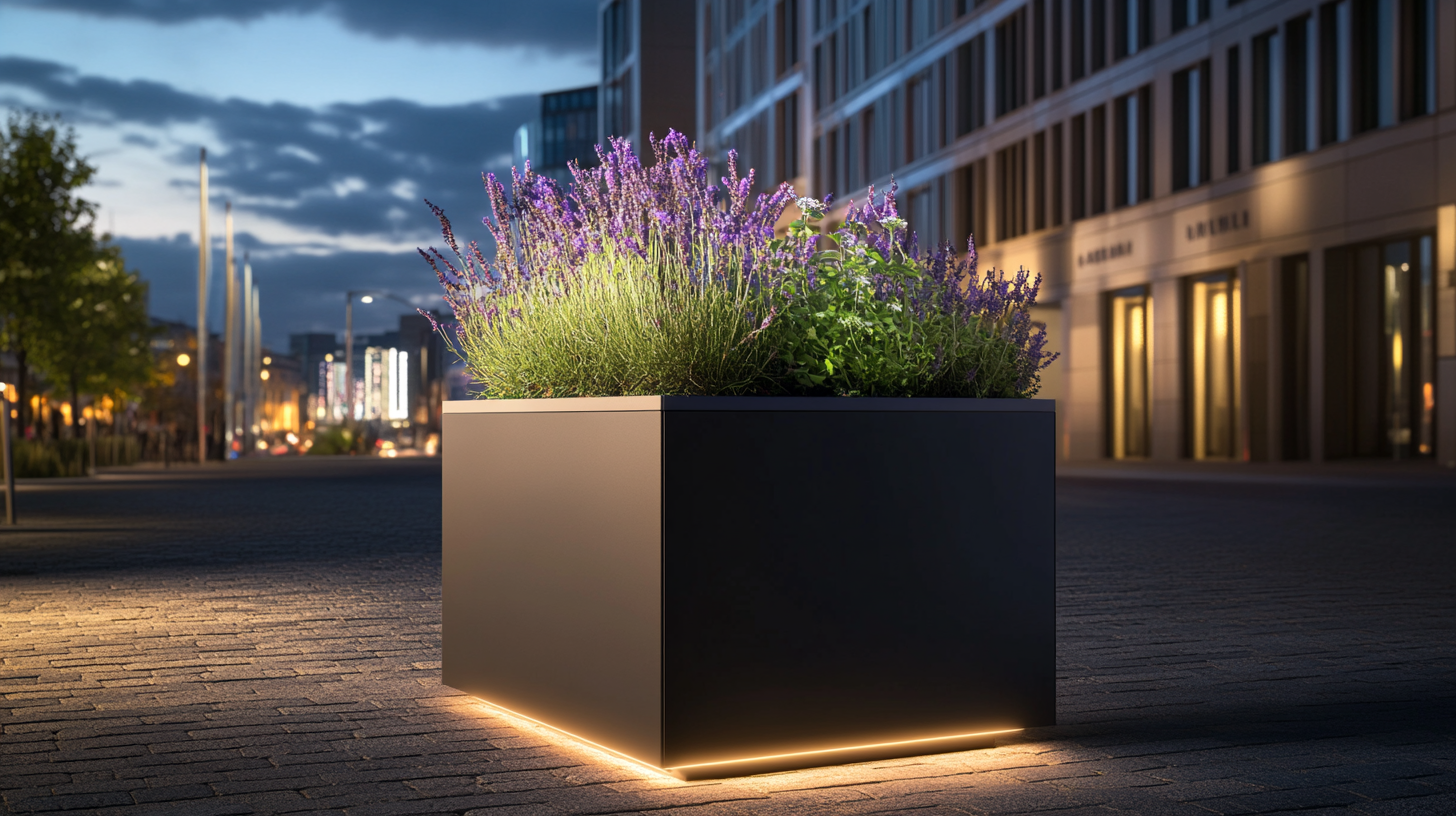
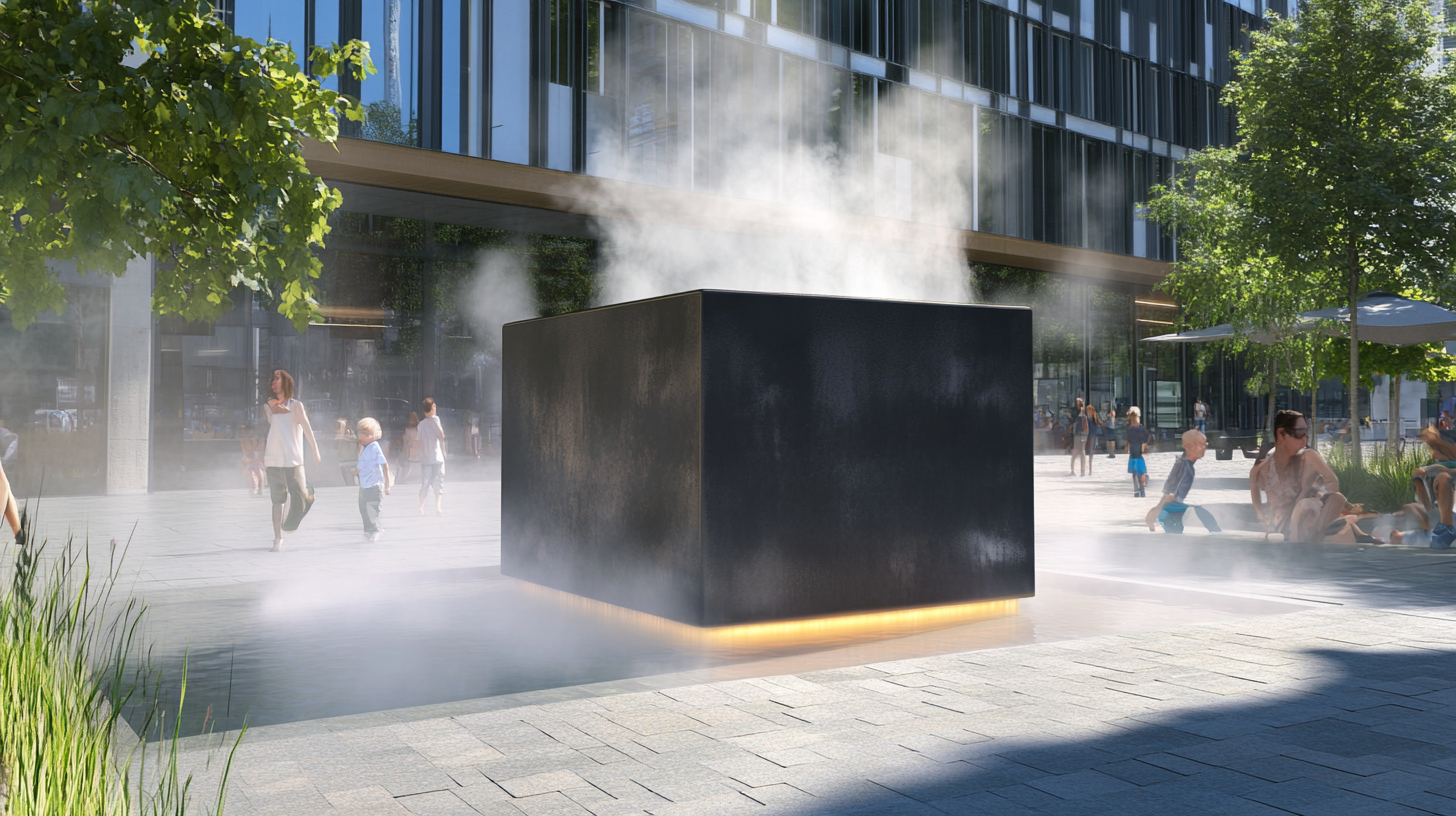
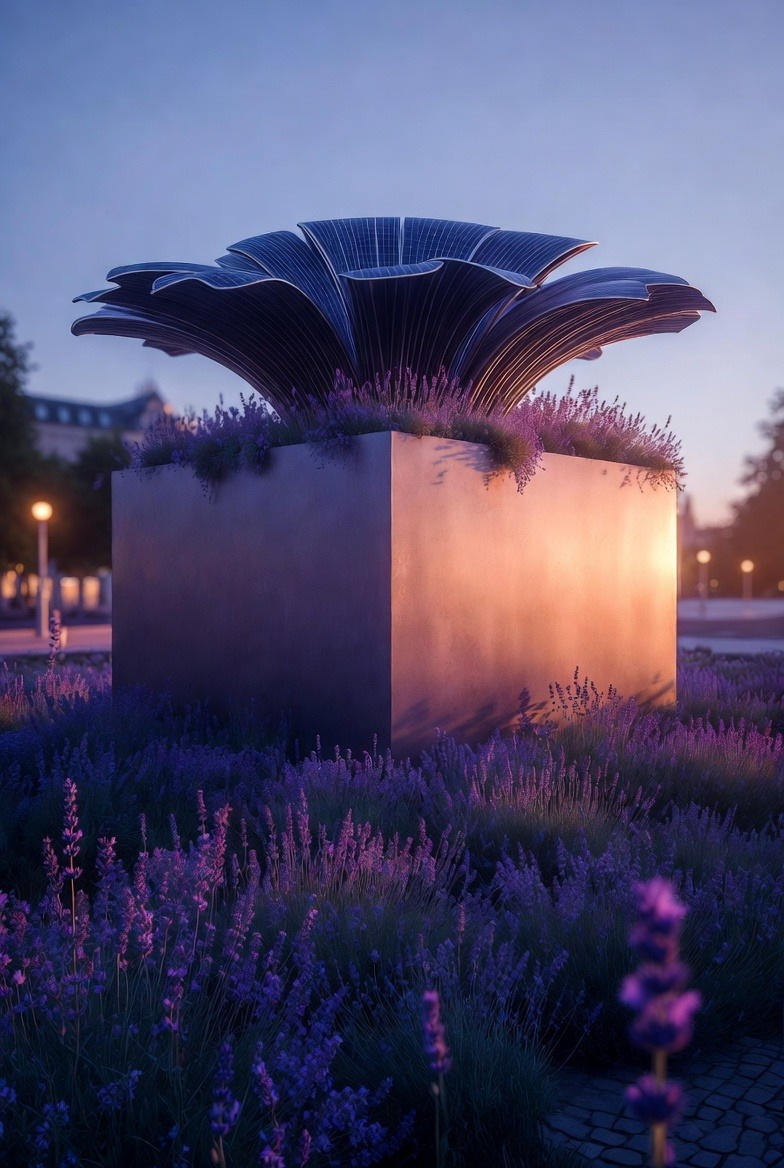
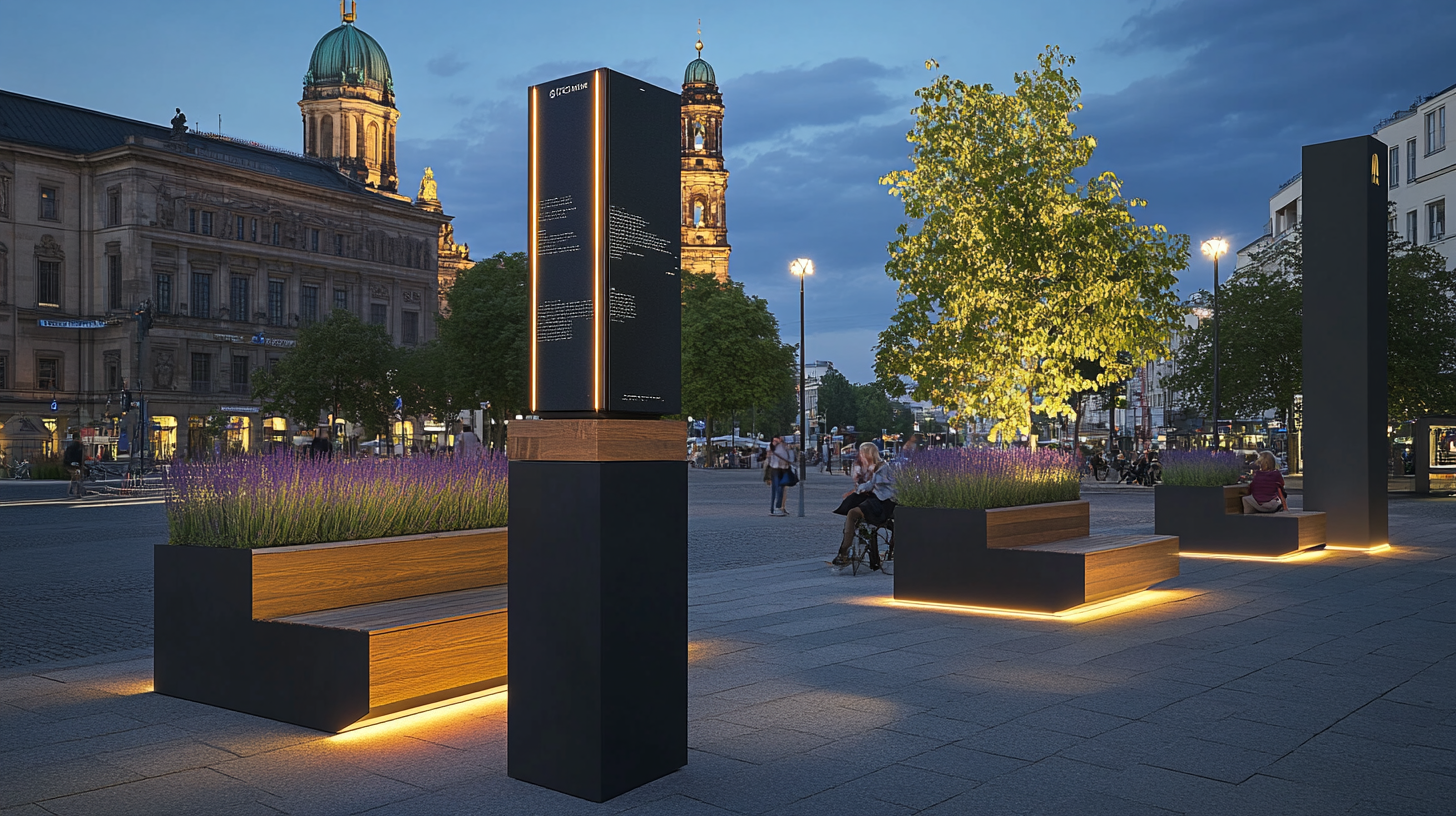
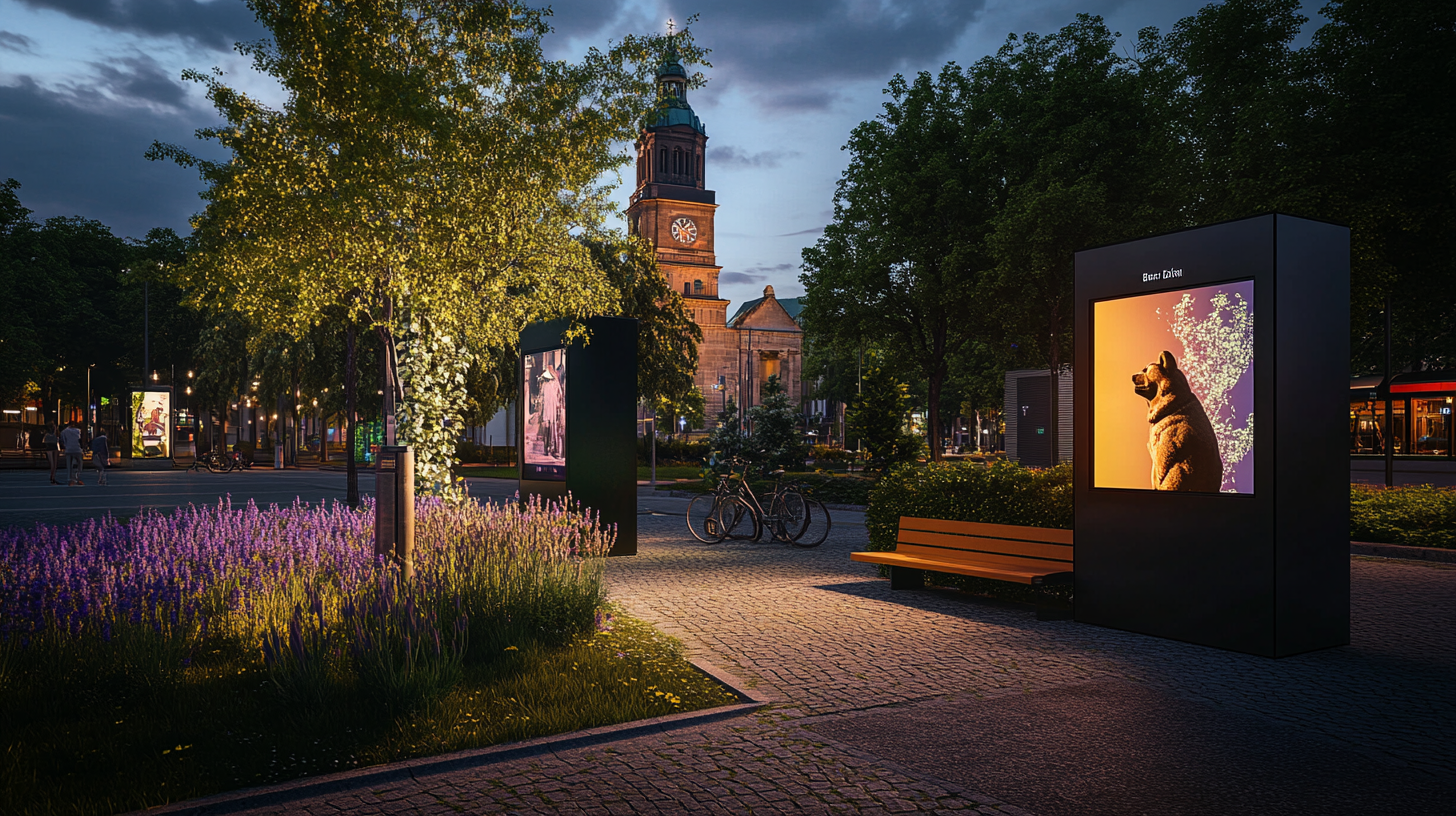
Four seasons. One system.
From summer nights to New Year's Eve, golden hour to snowfall — Berlin-Cube stays part of city life.
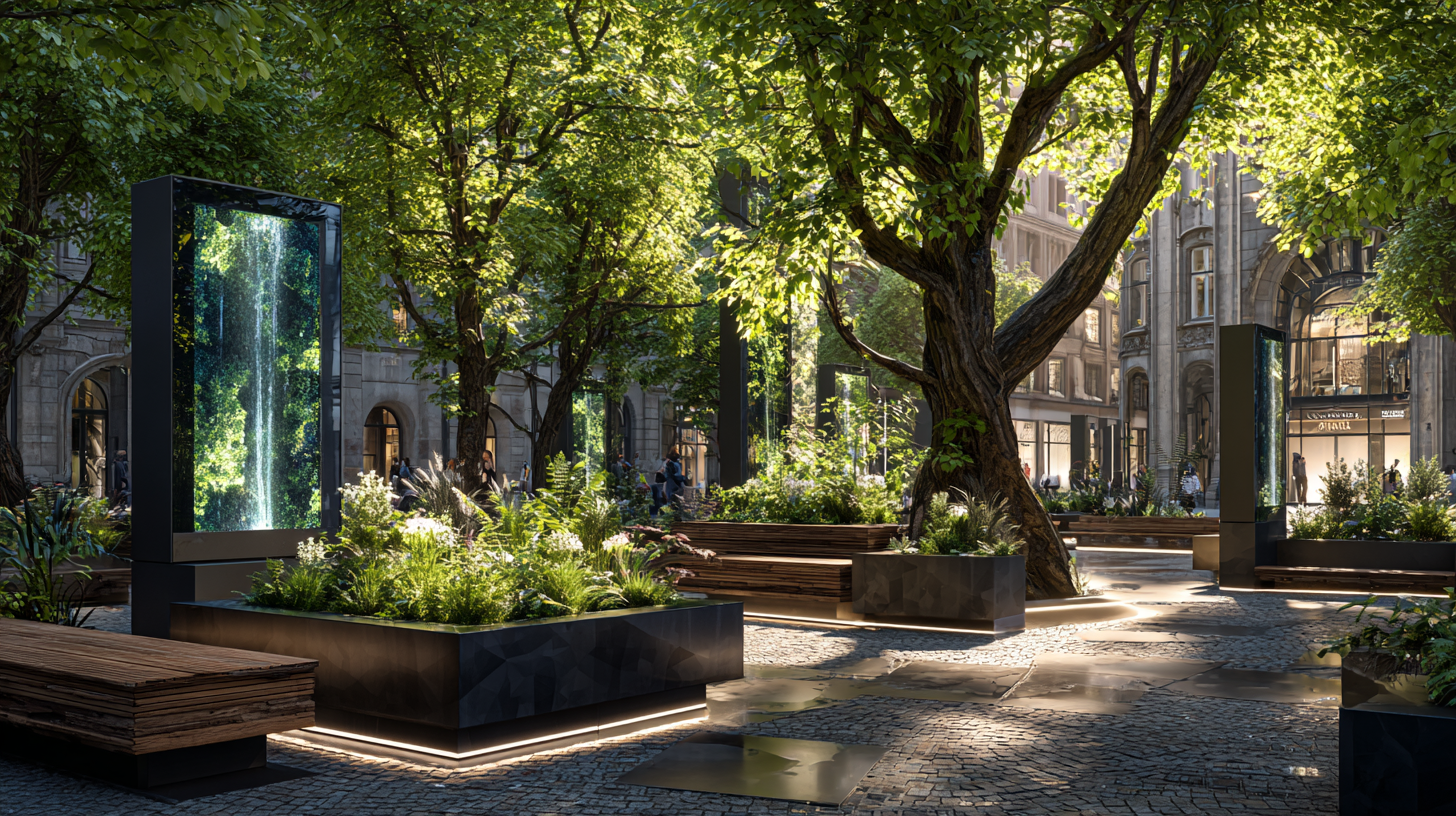
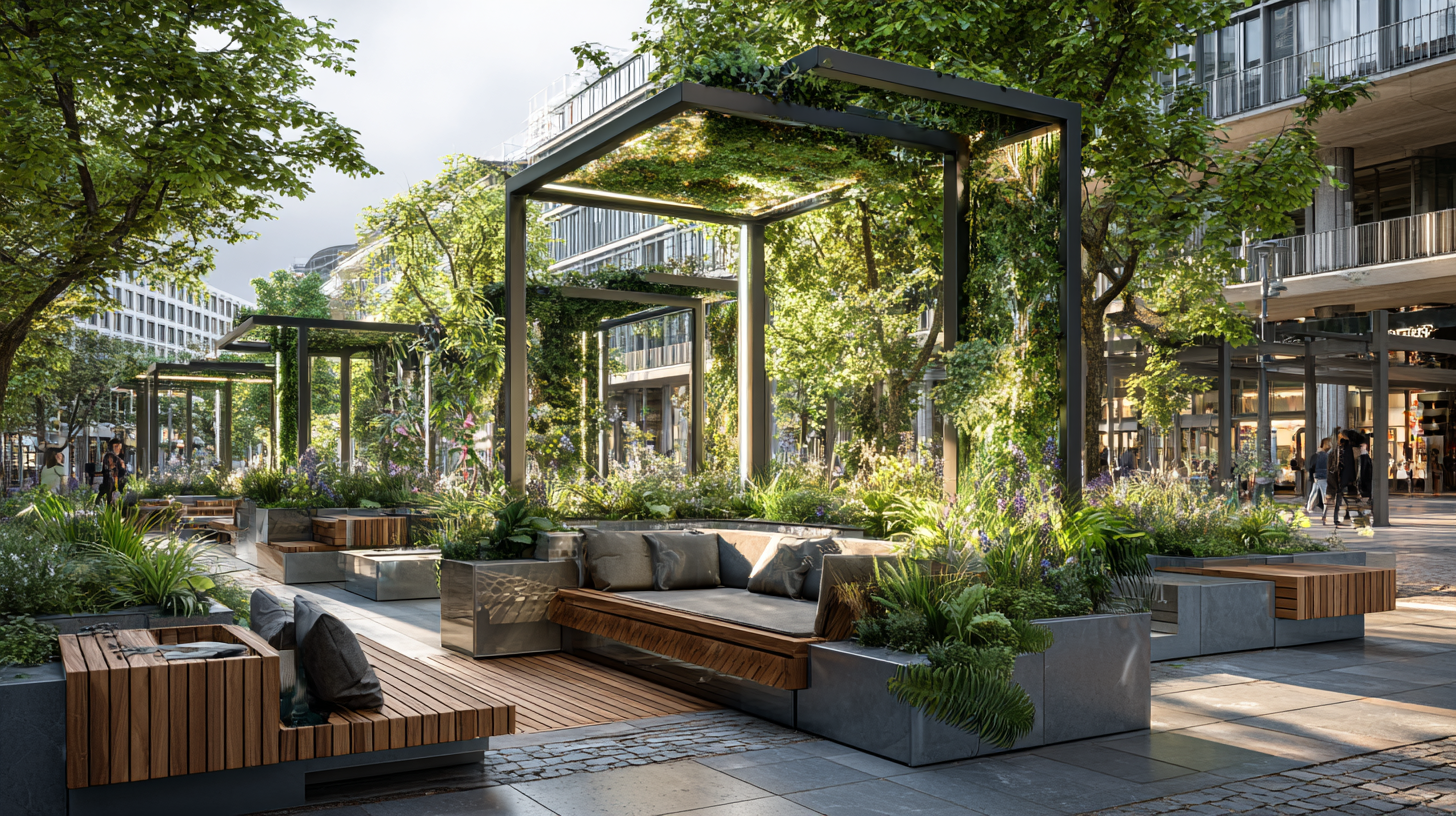
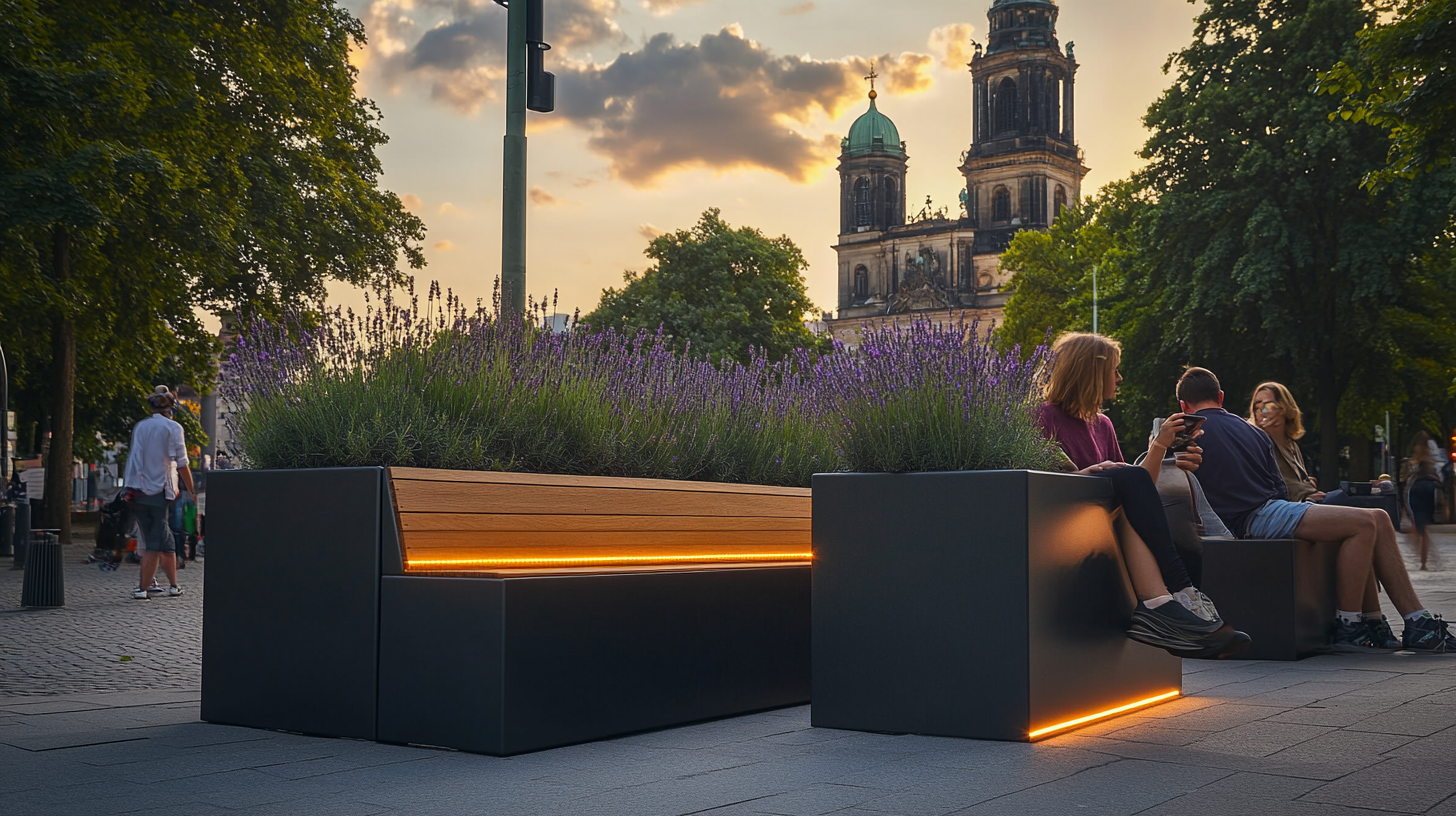
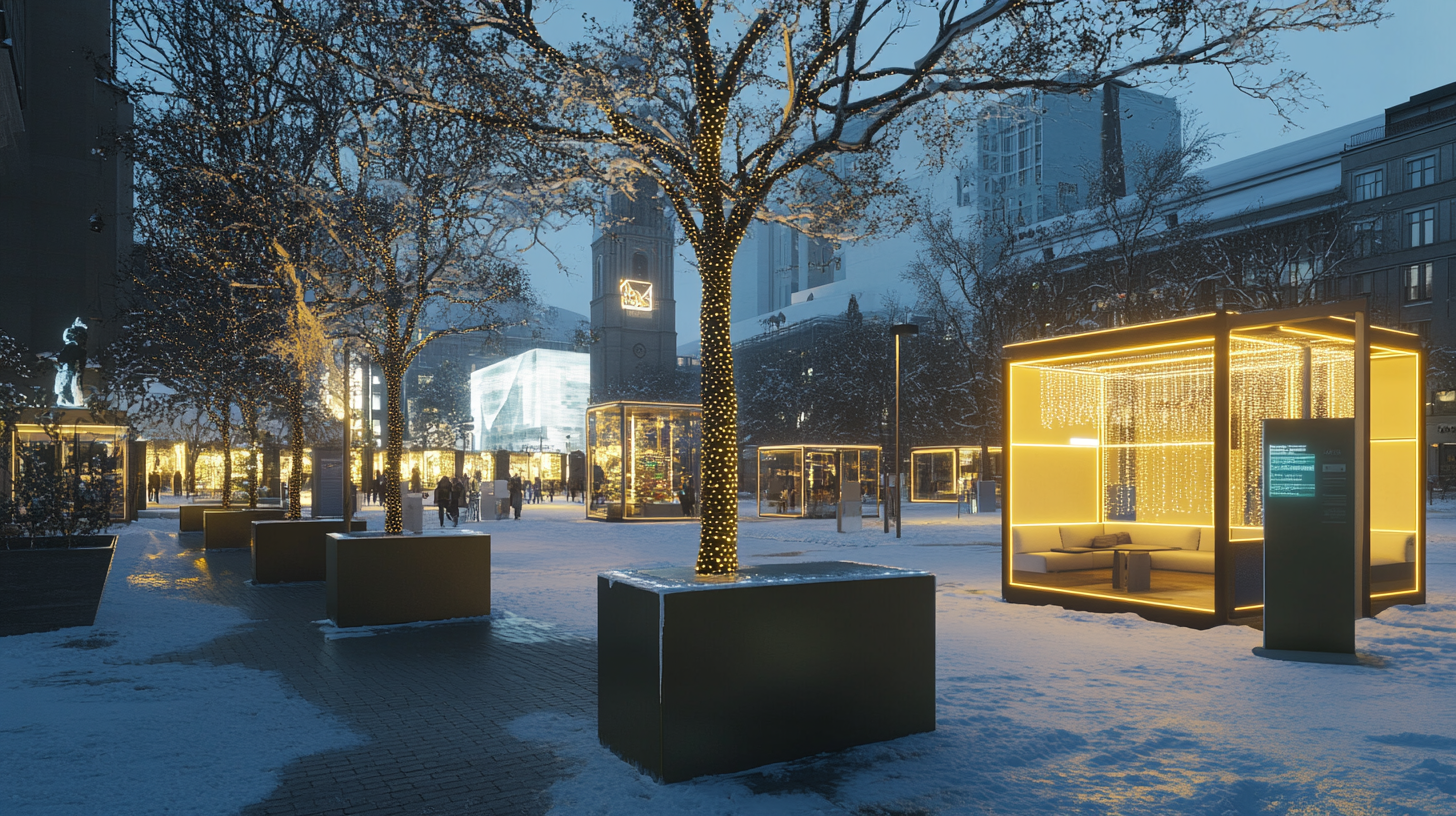
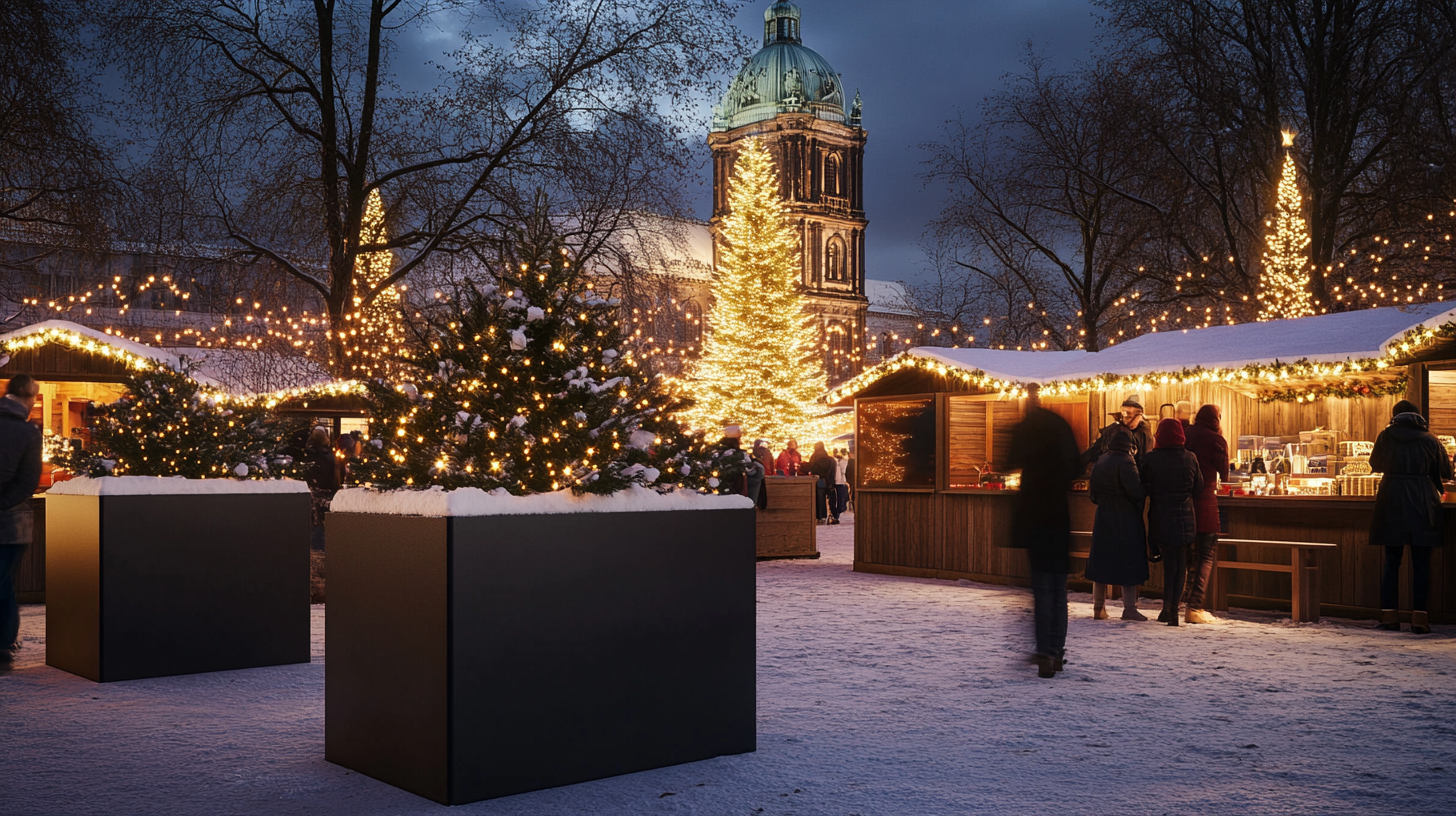
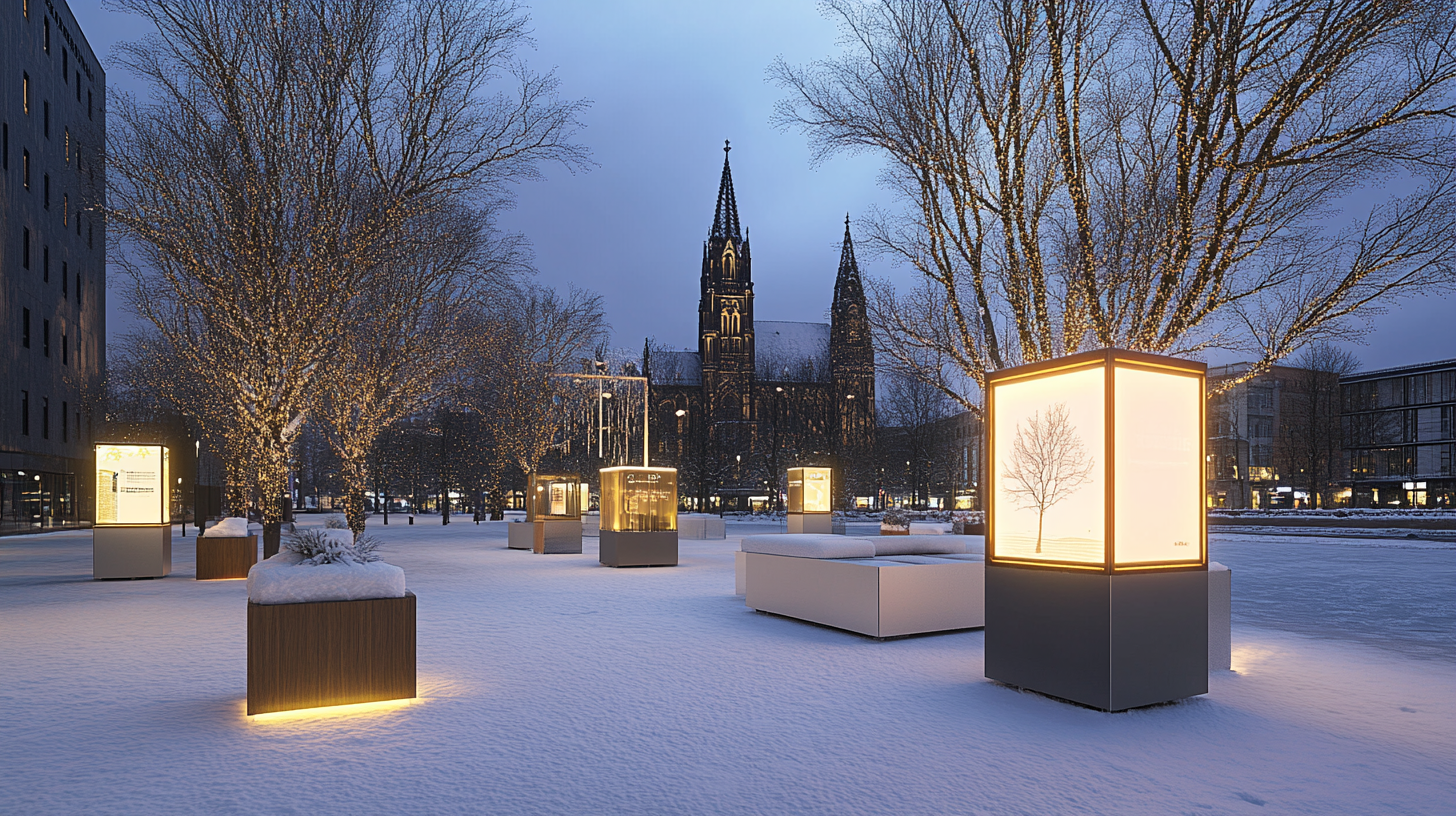
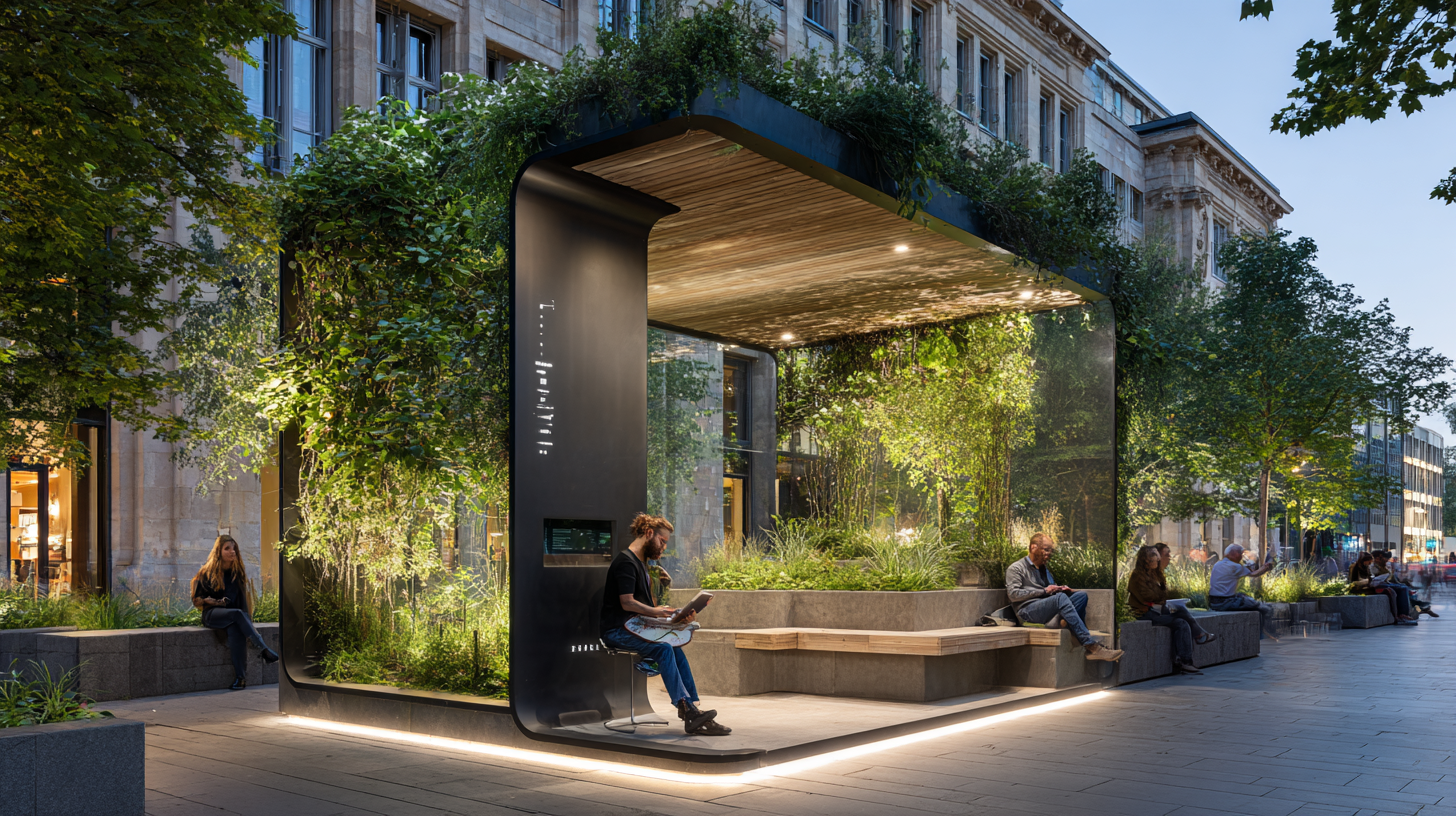
A vision for the public space of tomorrow.
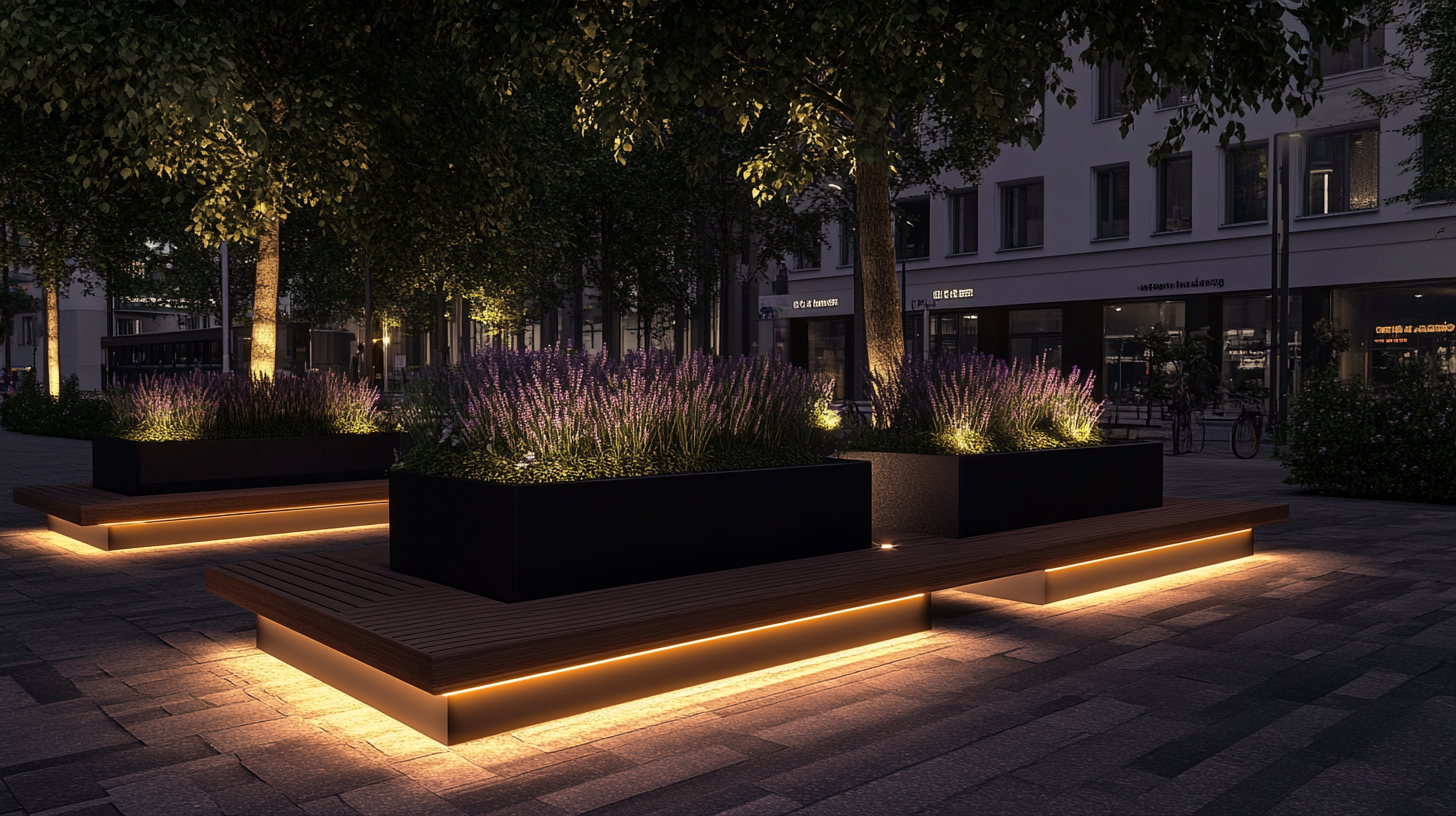
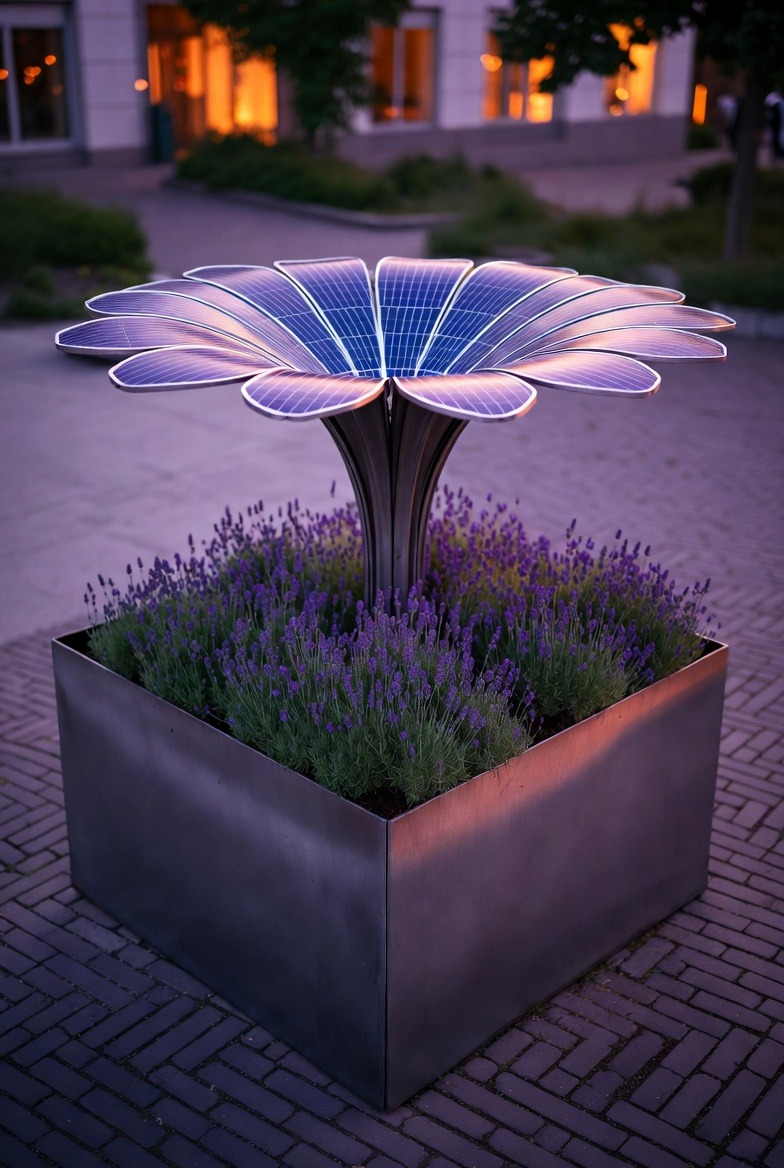
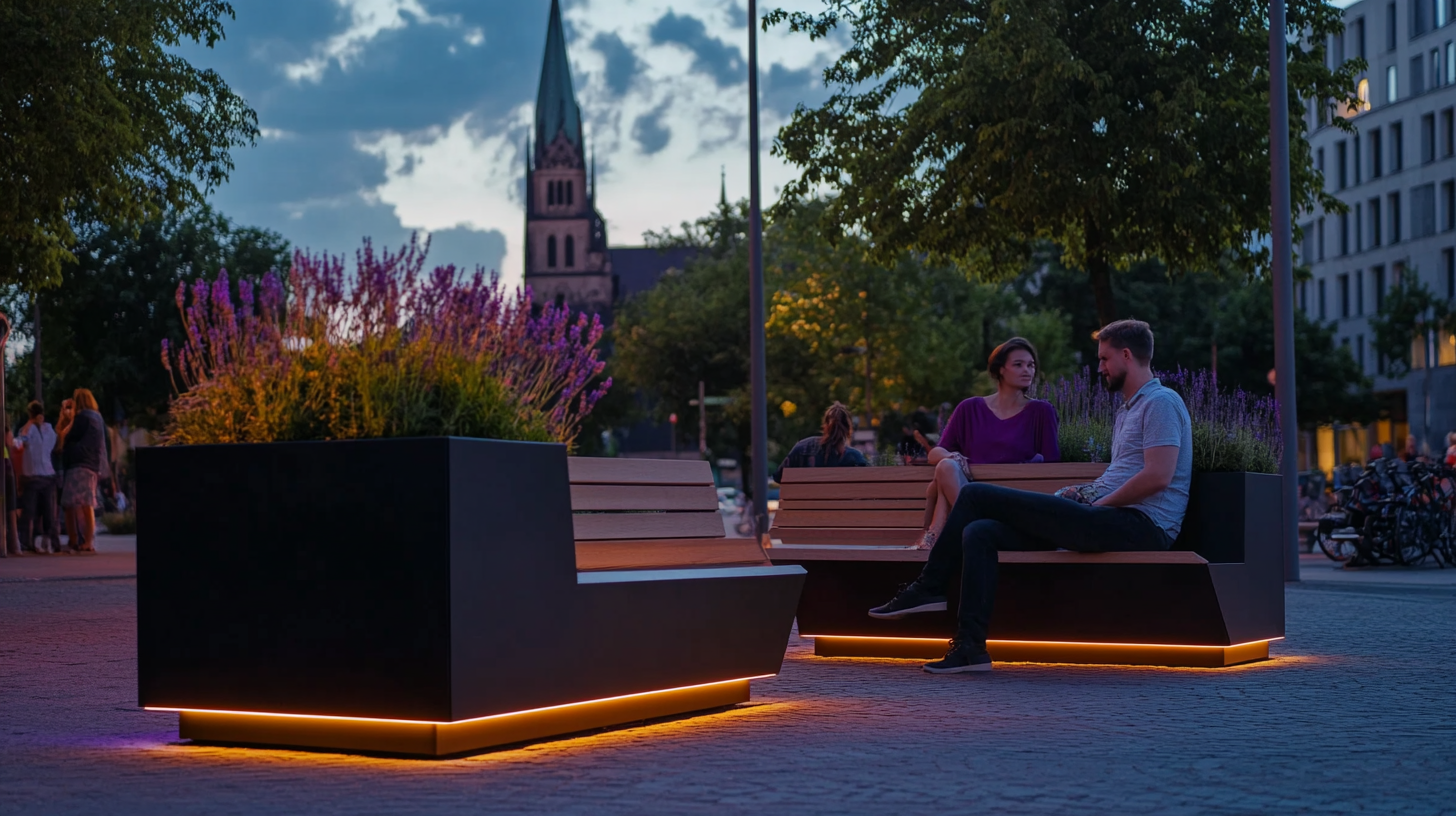
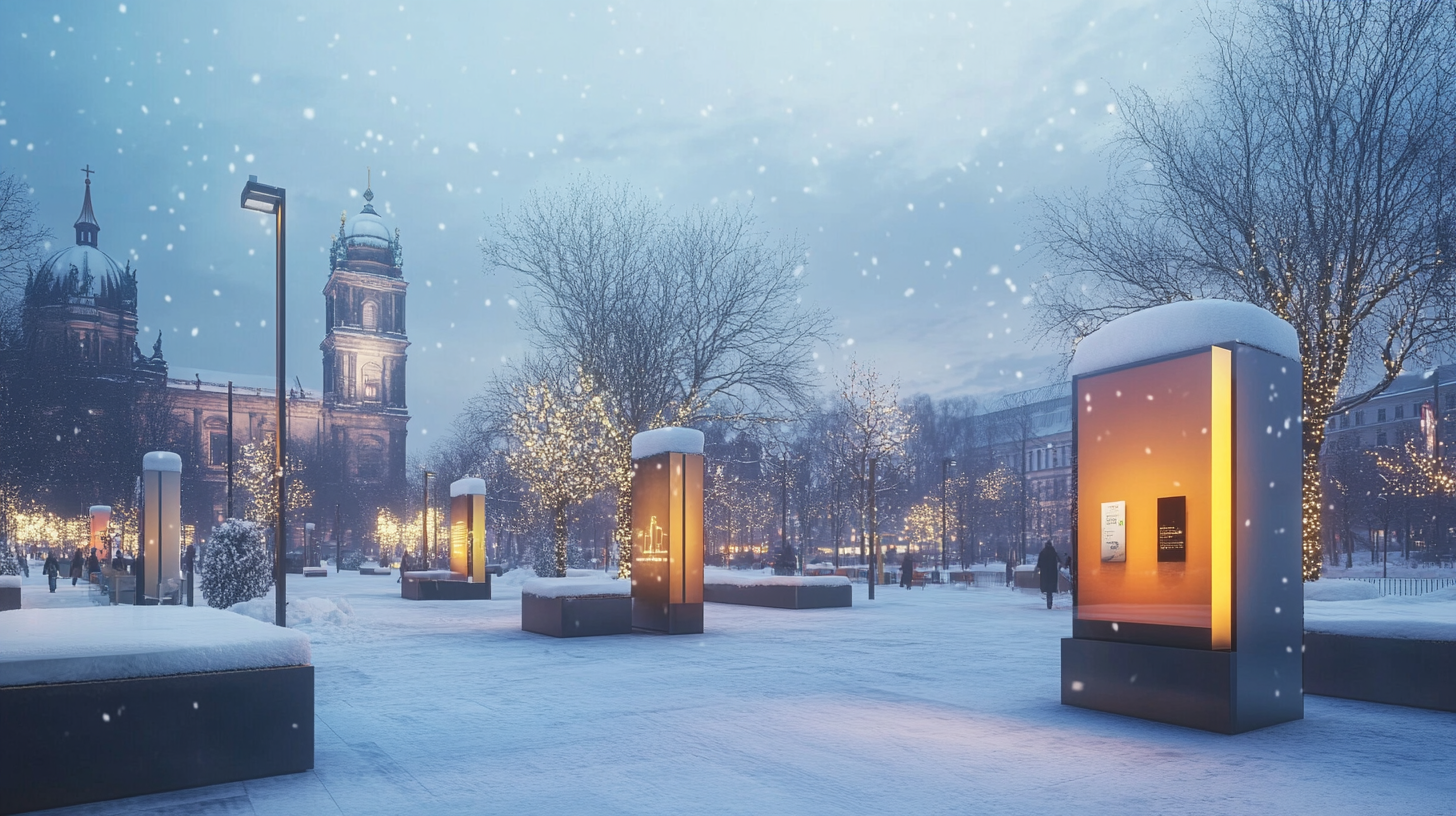
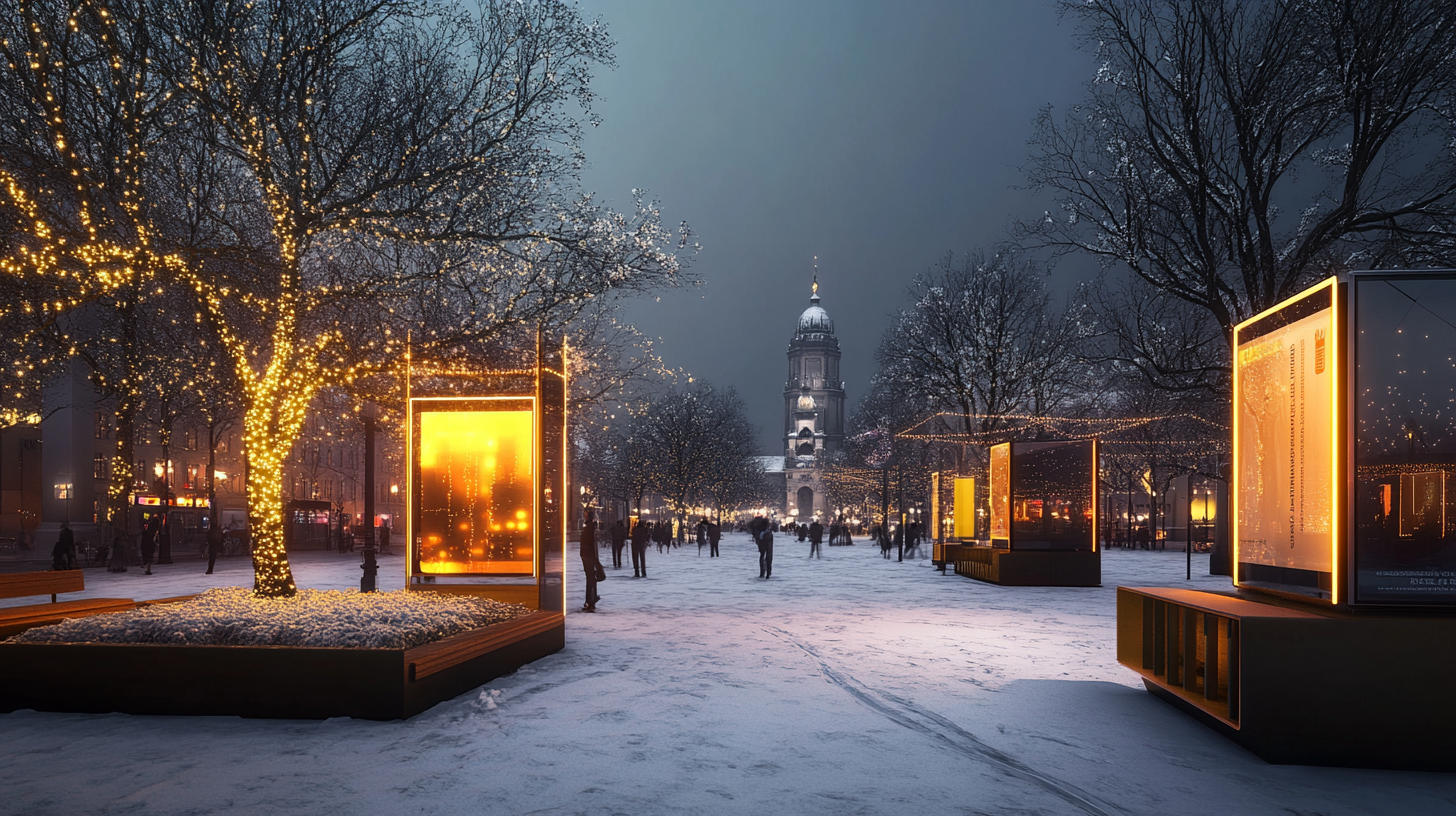
Concept visualisation · not adopted planning.
Technology.
Clean separation. No unproven claims.
- 01DEKRAIndependent testing by DEKRA — documented.
- 02Generation 1First tested series. Built and publicly visible.
- 03IWA 14-1 N2AImpact protection to the international test standard.
- 01Generation 2Next series — higher safety reserves as target.
- 02New modulesWater, Solar, Mobility, Media, Smart in development.
- 03New functionsSensors, storage, adaptive systems — under way.
DEKRA crash test 2018 — original footage
- Testfahrzeug
- 7.114 kg
- Aufprallgeschwindigkeit
- 63,9 km/h
- Eindringtiefe
- 7,95 m
- DEKRA-Prüfbericht
- Nr. 201844624
- Norm
- IWA 14-1:2013
- EU-Patent
- EP 3 486 374
7,95 Meter hinter dem Modul beginnt der sichere Bereich — genau so wird bei der Planung der Abstand zum geschützten Platz gewählt.
Vollständiger Prüfbericht auf Anfrage- DEKRA-Crashtest IWA 14-1:2013
- EU-Patent EP 3 486 374
- Realisierung Kantstraße 2026
- Neuer DEKRA-Crashtest nach ISO 22343-1 — Terminvereinbarung läuft
- Planung nach DIN SPEC 91414-2
- Statik- und Standsicherheitsnachweis
- CE-Konformität
- Stadtmöbel-Prüfung DIN EN 581
- Umwelt-Produktdeklaration (EPD)
- Ausschreibungsfähige LV-Texte
Kein Ergebnis vor dem Test. Fakten statt Versprechen.
Sicherheit muss man nicht sehen. Man soll sie erleben.
Financing.
Berlin-Cube combines multiple financing components. Not as a promise that every project finances itself — but as a toolbox.
Municipal investment
The foundation — budgets, special funds, investment programmes.
Subsidy programmes
EU, federal, regional — safety, climate, digital.
Sponsoring
Location-based partnerships with clear governance.
Advertising surfaces
Digital media and information surfaces in the urban realm.
Service company
One contract partner instead of fragmented responsibilities.
Care
Continuous operation, maintenance and spare parts.
Modernisation
Retrofits, new modules, new functions across the lifecycle.
Depending on location, individual components can be weighted differently. No single component stands alone.
What cities receive funding for today
Climate adaptation & heat resilience
CO₂ sequestration, shading, cooling.
Sponge city & stormwater management
Capture and reuse rainwater.
Urban greening & biodiversity
Planting, habitats, urban ecology.
Smart City & digitalisation
Sensors, data, connectivity.
Charging infrastructure & mobility
E-bike, charging points, micro-mobility.
Public safety & vehicle mitigation
Tested impact protection.
Which programmes apply in each case must be assessed project-by-project — we support this.
Funding guide for municipalities — which programmes fit which building block, in brief.
Designed in Berlin.Built for Europe.
Berlin is the origin. Europe the vision.
As a perspective — not a promise.
Questions from municipalities
What is Berlin-Cube?
Berlin-Cube is a modular urban infrastructure system: a DEKRA-tested vehicle security barrier combined with urban greenery, seating modules, integrated lighting and smart city functions. The design is protected by EU patent EP3486374.
Is Berlin-Cube a tested vehicle security barrier?
Yes. DEKRA generation 1 to IWA 14-1 N2A — tested with a 7,114 kg test vehicle at 63.9 km/h. The safe zone begins 7.95 metres behind the module.
Where has Berlin-Cube been built?
Since June 2026, the first complete installation has stood on Berlin's Kantstraße, between the Waldorf Astoria and Upper West — planted, lit, walkable. The installation remains in place until the end of September 2026, when it will be dismantled as planned — set up without foundations, removed without trace. A temporary demonstration also stood at an outlet centre in Wustermark, Brandenburg.
Does Berlin-Cube need foundations?
No. The modules stand on the existing surface — without foundations and without structural intervention. The complete Kantstraße installation was set up in around ten hours.
What is the next step for my municipality?
Get in touch: via the contact form you can request the funding guide and arrange a conversation about your location.
Berlin-Cube in the media
Since the pilot installation went up in the Kantstraße in the summer of 2026, the daily press, radio, television and trade media have reported on the system. A selection.
“That is better than barricading everything.”
“The new ‘Berlin-Cubes’ combine quality of public space, environmental education and certified vehicle barriers into a new kind of approach.”
“Cube-shaped barrier elements with steel cores were clad in timber, planted and in places fitted with seating.”
Berlin-Cubes on Kantstraße: urban gardening meets vehicle protection
A detailed account of the pilot installation: how planted modules combine certified vehicle protection with quality of public space and environmental education — and what that means for the design of city squares.
Subscriber articleMore safety, fewer bollards: Breitscheidplatz before its rebuild
Three possible approaches for Breitscheidplatz, compared. The installation on Kantstraße stands for the idea of designing protection as street furniture rather than as a barrier.
Safer cities: Berlin-Cubes as an example of modern security modules
Live interview with Martin Fichtelmann, hosted by Massimo Maio, on how public squares can be permanently protected without ending up looking like a fortress.
RadioTen years after the attack: Breitscheidplatz needs new barriers — but which ones?
A stocktake in the tenth year after the attack. The Kantstraße installation is described as a source of ideas for a better-designed solution.
Subscriber articlerbb24 BERLIN reports from Kantstraße
Television report on the pilot installation on Kantstraße in Berlin.
Television“Not barricading everything”
A report from the AG City event at Breitscheidplatz. District Mayor Kirstin Bauch, AG City board member Patrick Wittke and Martin Fichtelmann make a joint case for protection that suits the city.
Print, page 15Martin Fichtelmann invents the Protection-Cube
The first full portrait: how the principle came about, the 2018 patent, the DEKRA crash test and the first installation at Berlin's Alexanderplatz.
Press enquiries to info@berlin-cube.de · High-resolution images and a factsheet are available on request at short notice.
Let's build better cities together.
Berlin-Cube exists to help cities become safer, greener and more livable.